Monday, 5 September 2022

Home to a happy welcome


After a week away - our first holiday abroad for three covidy years - I couldn't have asked for a better returning gift from the moths: a Clifden Nonpareil in the trap, somewhat battered but evidently at home in spite of the drought. This is the fourth year running that I have recorded one or more here, after a lifetime of certainty that this wonderful creature was something that I would never see. More on that here, in my post about the debut Nonpareil in mid-September 2019.


Here is Saturday night's arrival as I first found it, with the Hebrew Character nestling alongside to provide useful scale. The Nonpareil is one of the UK's largest moths. And here it is acclimatising itself beside a windfall plum, opening its wings to reveal the glorious blue bands - such a rare colour in moths, giving a glimpse of its delicate underwings and finally in a short video, scarpering off:


Blue has been a theme of our return home; in the greenhouse, we found the sad little scrap of a female Holly Blue; sad but also very useful because this is a butterfly which invariably in my long experience rests with its wings shut tight, never opening them to show. Its underwings are lovely, a sort of chalky, gentle-dotted duck egg blue, but it is a treat to see the iridescent topwings:


The blue - my favourite colour just as my youngest grandchild sticks staunchly to green - extends beyond the world of butterflies and moths. Our Morning Glories have just come into flower and are covered in buds. The chickory meanwhile produces flower after flower - some weed!


Saturday, 20 August 2022

Overseas visitors and others


P and I were having a cream tea in Woodstock this afternoon after cycling over there and we very much enjoyed watching the passing visitors from all over the world. Much the same phenomenon goes on the UK moth world at this time of year, with interesting species exploring north from the continental mainland, helped by warm winds.  Some are very dramatic like the Silver-striped Hawk moth which I hope to attract to my light one day. But for the time being, I am happy with this Bordered Straw, above, which called a few nights ago. It's a regular arrival here and in most of the southern UK, powerful-looking and boldly-marked.


Another distinctive moth, but one which is resident here all year round, is the Purple Bar. Its bars of black and white may provide a dazzle camouflage defence against birds but they certainly don't hide it from the human eye. I've composited three photos from varying distances - the top one shows how immediately visible it is to the human eye, even at a distance.


The grandchildren have been staying and so we've had the customary ritual of getting moths on to fingers and having them photographed - quite interestingly in the instance above, which shows the size difference between the male and female Orange Swift. He is Little and she is Large, much like the seaside couples in the famous Bamford photographs.


The children are also commendable advocates for insect interests and chided me when he kept flicking over the beetle  above, to get pictures of its lovely metallic blue underside. "Don't be mean, Grandpa," said No 1 who is the most soft-hearted. So this is the best I can do for you. Update: many thanks to Conehead in Comments for ID-ing this as a Dor Beetle, one of the Geotrupes family.


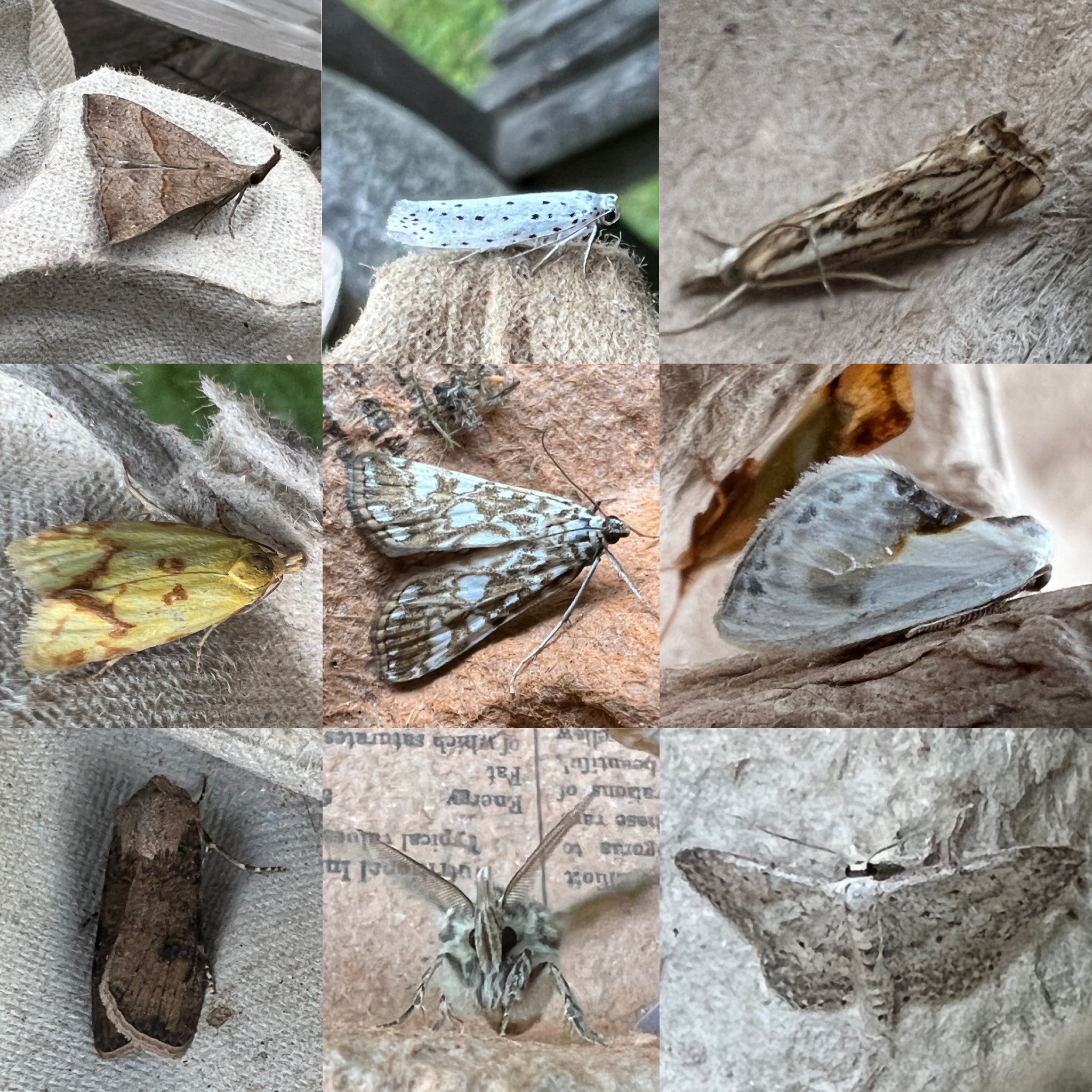
Much else has been flooding in. Above (l-r in successive rows): Treble-bar twice, Flounced Rustic, Angle Shades, the micros Blastobasis adjustella, an adventist introduced in imported goods, and Ypsolopha sequella, one of the many variants of Common Rustic, a Lime-speck Pug and a Light Emerald.


There are lots of differently-coloured ladybirds in the trap at the moment too, adding small dots of bright colour to the eggboxes. Update - all Harlequins, says Conehead in Comments, for which many thanks again. And here are some more moths, below: the Snout with its Pinocchio palps, the micro Cherry-tree Ermine which can make unbelievable quantities of sticky web on plants, trees and even cars, two more micros: Catoptria falsella and the lovely Brown China-mark Elophila nymphaeata, the equally delicious and very distinctively-shaped little macro, the Chinese Character, a Turnip, a Pale Prominent seen head-on eeeek! and a Small Dusty Wave, well-named except that it is not just Small but Very Small.  More soon.

Wednesday, 17 August 2022

Dorset beauties - and some at home too


We've just had a lovely week in Dorset, partly based at Bridport and partly in Weymouth and greatly blessed with sunshine at both. As is so often the case in the UK, this week has seen a complete turnaround in the weather with flash flooding in both towns.

I'm sorry for those who chose this week rather than last for their holidays, but it looks as though the sun is coming out again even if the temperatures are not as fiercely hot as they were for us. To some extent, I think that the hottest weather was too much for butterflies but we still saw a good collection as above - Painted Ladies, Comma, Gatekeeper, Small Tortoiseshell and Peacock.


Along the banks of the little river beside which we stayed in Weymouth's outskirts, there were also plenty of small dragonflies which I plan to ID soon with the help of the excellent web pages of the British Dragonfly Society. Update: Actually my kind and very knowledgable commentor Conehead has got there first and suggest that they are a female Beautiful Demoiselle, a male Common Darter and a a female Red-eyed Damselfly.  Thanks so much!  Moth names are pretty unbeatable but the Odonata run them close. My best sighting, though, was of a Clouded Yellow butterfly on the cliffs above Ringstead Bay, a delectable spot shown in the picture below. The walk from the National Trust car park is long and steep but rewarding in every sense and the beach is bliss.


Colourful or pleasantly-patterned beauties were also waiting for us when we got home and lit the moth trap again - for example, the familiar little micro Pandemis corylana or the Chequered Fruit-tree Tortrix, the Common Carpet, the Common Rustic - a very variable species - and the Flame Carpet with its fine pinky-maroony central wing strip.


I was also delighted to find that delicately-named, patterned and coloured moth the Maiden's Blush in one of the eggboxes and the truly lovely Bordered Beauty in another, from which it decamped to my dressing gown. The third in the trip below is a Vestal, a pure-looking moth named after the temple virgins (usually at least) of ancient Rome, whose simple creamy toga with a pinky-purple stripe its colouring resembles.


Finally that rakishly distinctive regular the Angle Shades and a line of the children and grandchildren's washing, showing that we humans can brighten up the world too.


Monday, 15 August 2022

Talking of pests...


My note about immigrant moths which are sadly also pests on crops coincided with a request from a friend on holiday in France for the ID of a very fine-looking arrival at her cottage. Her photo above showed it resting like a venerable sentinel or distinguished alderman; a very big moth with the sleek physique of, say, a Pine Hawk.


I had no idea what it was but Google soon turned up its dramatic persona, an 'adventist' or moth transferred to a new home by human agency, the Palm Moth, native to South America and imported to Europe in consignments of ornamental palms.  It is already a serious threat on the continent and the Government pest regulators here (who supplied the second photo showing its splendid underwings which must terrify birds when flashed) are very much on the watch for it.


Curiously, in spite of the size and dramatic content of Richard Lewington's typically excellent painting in the Moth Bible, I hadn't notice the illustration above. I suppose I have always concentrated on the section of the book where more likely arrivals are to be found. Anyway, there it is, with very precise details of the few arrivals in Britain, all of which were killed before they could spread. I do wonder though, the way things are going with Continental arrivals, whether examples of this impressive creature are going to be picked up in moth traps here, one of these days.


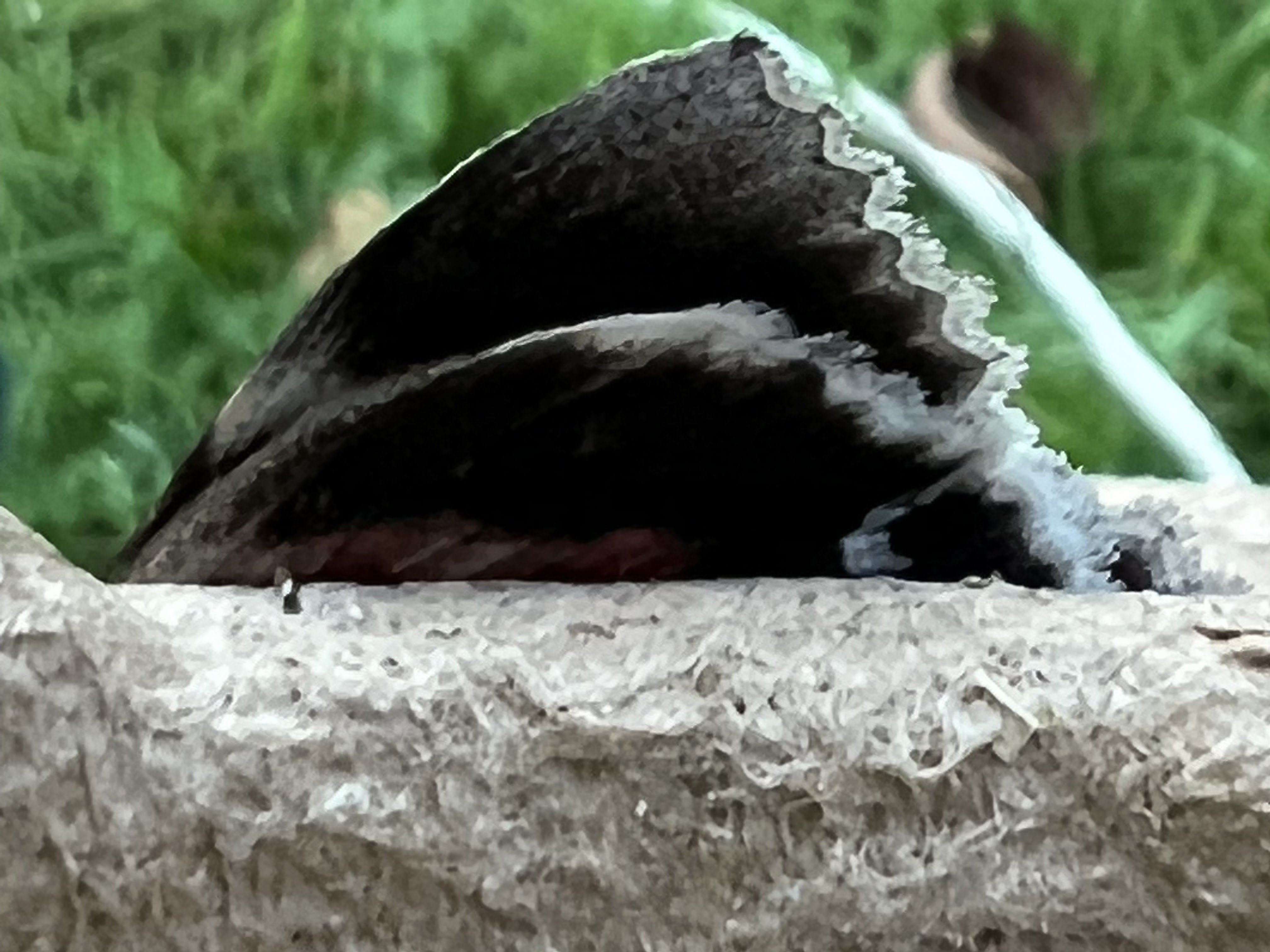
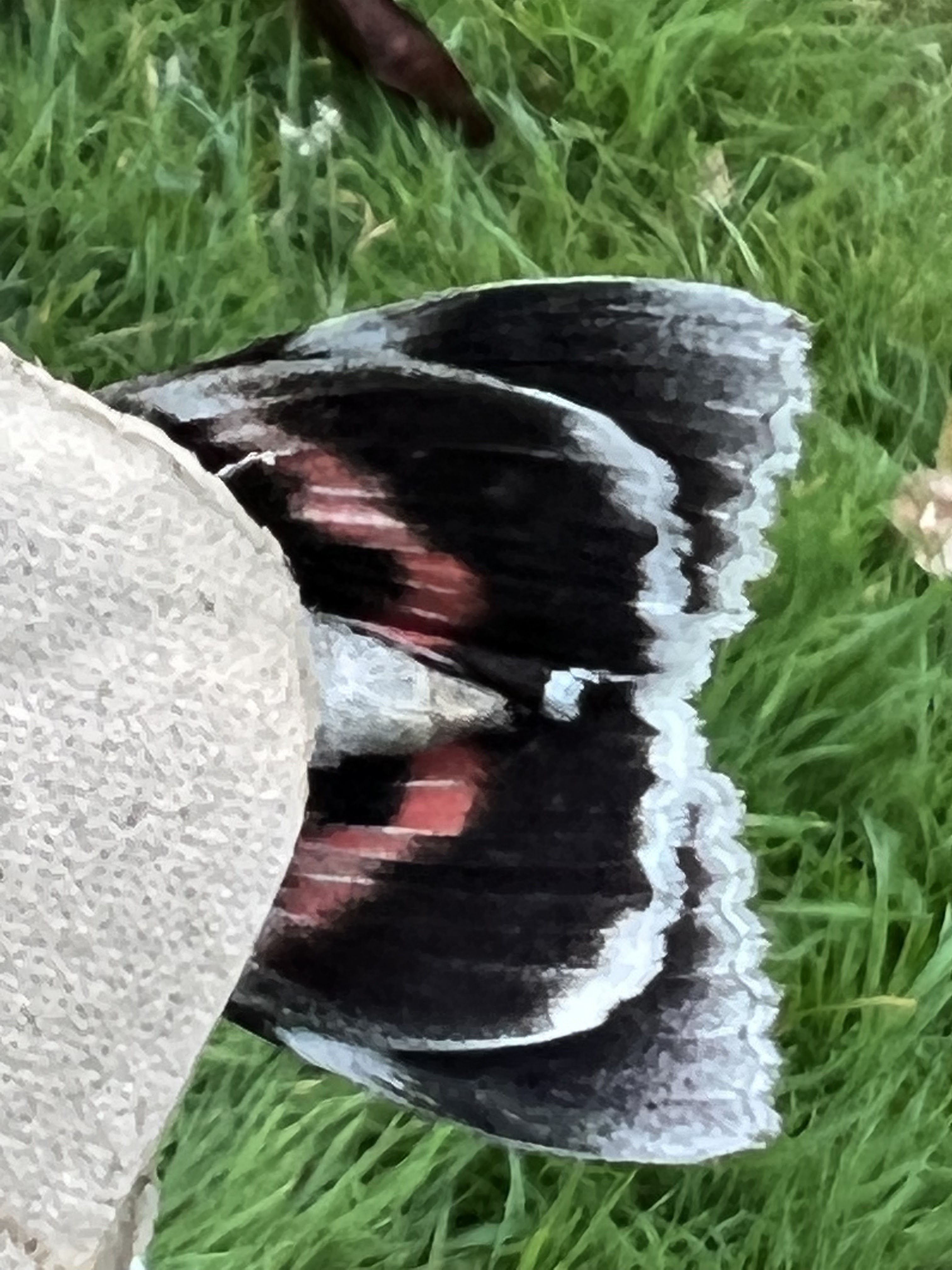
Meanwhile we must content ourselves with the more modest but very lovely Red Underwing which has just started arriving here. I managed to tempt this one to show a fraction of its own bird-scaring underwings, above, and then had a peek at them from underneath, below.


The good old faithful Poplar Hawk moth keeps turning up and the freshness of the example on the vine below suggests that a new generation, perhaps the third of the year, is emerging from its pupae. 


In contrast to their youthfulness, this old and battered Pine Hawk spent a night here too. Although its wing-scales have grown thin, the distinctive jetplane shape of the moth, which makes it one of my favourites, is intact.


A couple of other nice things before I go: a Scorched Carpet moth and a pretty male Ringed China-mark micro, whose Linneaean name of Parapoynx stratiotata has a distinguished ring. The females, sadly, are a contrasting mix of pale browns.


Thursday, 4 August 2022

Beautiful pests


A couple of interesting moths today which would have been a great surprise to anyone finding them only a few years ago. The first is the Box Tree moth, above, which was accidentally introduced to the UK in the early years of this century - the first record was in 2007.  It has flourished mightily and I get both its forms, the melanistic one on top and the standard version below. It is very bad news for owners of box hedges who fortunately do not include me. An infestation of caterpillars can doom a National Trust knot garden. Mind you, think of all the clipping box involves...


The second invader is the Oak Tree Processionary, which looks like a monochrome version of the Nut-tree Tussock and is also considered a potential threat,  this time to the good old English oak. Large concentrations of its caterpillars can strip a tree of its leaves, making it much more vulnerable to other pests.

The moth was introduced to England by mistake in 2005 and has expanded beyond its original toehold in London in spite of Government attempts at control. This is the first to visit me but others are being reported increasingoy on the Upper Thames Moths blog. Perhaps the most remarkable behavioural side of the species is the caterpillars' communal progress which accounts for its name. Here is a telling picture from the Government's Forest Research website.


In a happier part of the moth realm, here are a couple of pictures of the delicate Latticed Heath, a dainty moth which appears to believe that it is a butterfly. It looks like a relative of the Duke of Burgundy Fritillary, holds its wings in butterfly-style and even has butterflyish antennae.


Also in the graceful ranks of small moths, I'm always pleased to see a Single-dotted Wave like the one below, partly because it gives me yet another occasion to wonder which of its many dots is responsible for its name.


Talking of butterflies, we were back with the grandchildren after out holiday and I was pleased to catch a Holly Blue on their buddleia after prolonged stalking, in company with our two-year-old. He then proved his spurs by spotting this splendid Jersey Tiger, below, on the way to one of the local Walthamstow parks.  As Conehead regularly bears witness in Comments, this is now a common moth in London and we saw two more later on in the lovely gardens and open-air café of the Vestry House museum.


Finally, more of the many moths which have poured in here over the last two weeks: Copper (or Svennson's Copper) Underwing, Um.., Er..Knot Grass? Marbled Beauty, Orange Swift, Shaded Broad-bar, Carcina quercana, Um again.., and finally a Swallow Prominent.

In the second composite: Red Twin-spot Carpet, my Single-dotted Wave again (but I won't make any dot remarks), Yellow Shell and a Mother-of-Pearl, Dusky Sallow, July Highflyer, Least Carpet, the Oak Processionary once more, a Sallow Kitten and the everlasting Elephant Hawk moth.  Apologies for the repeats; my compositing sometimes gets out of hand.