Tuesday, 30 July 2013

The eyes have it


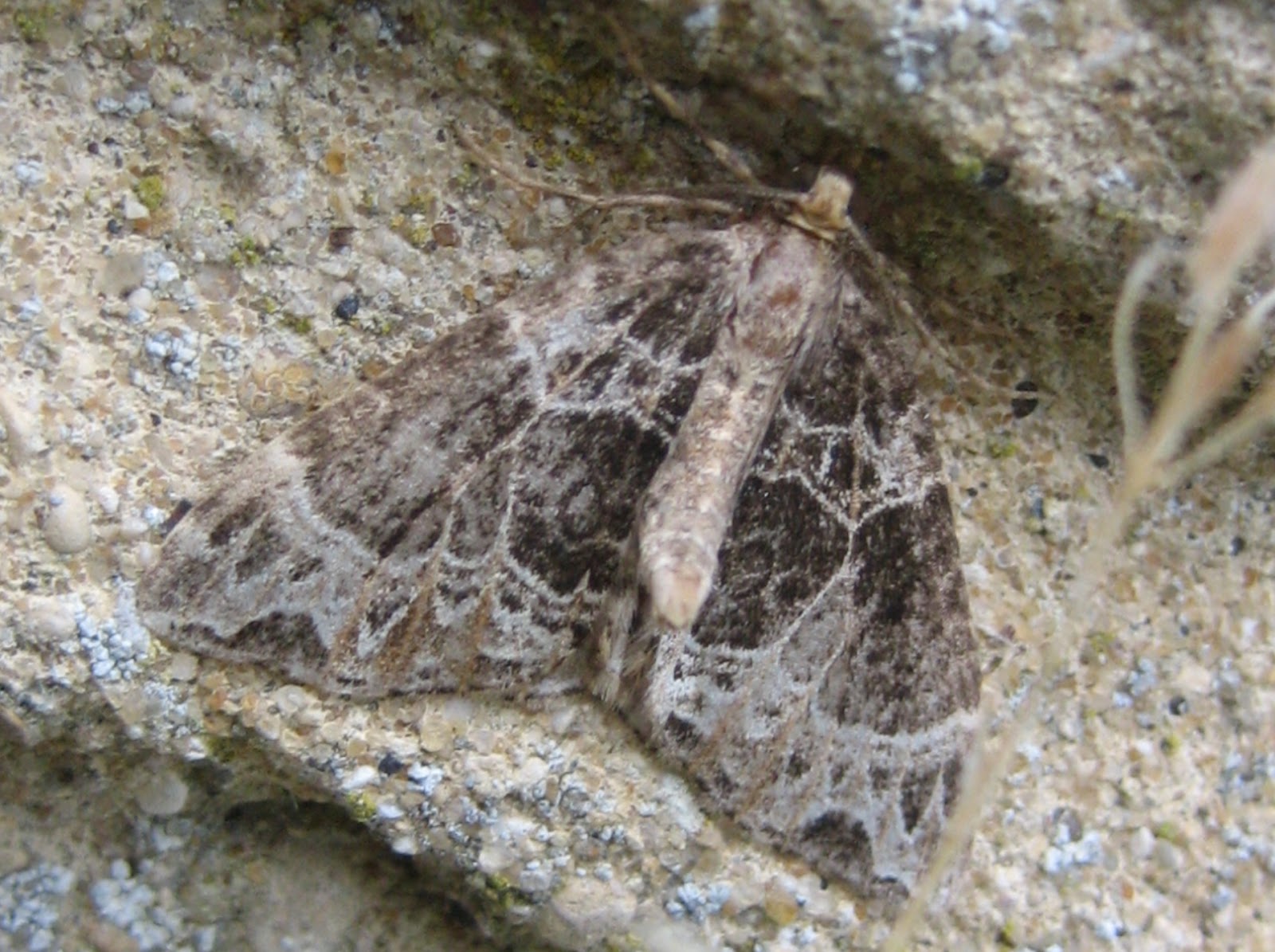
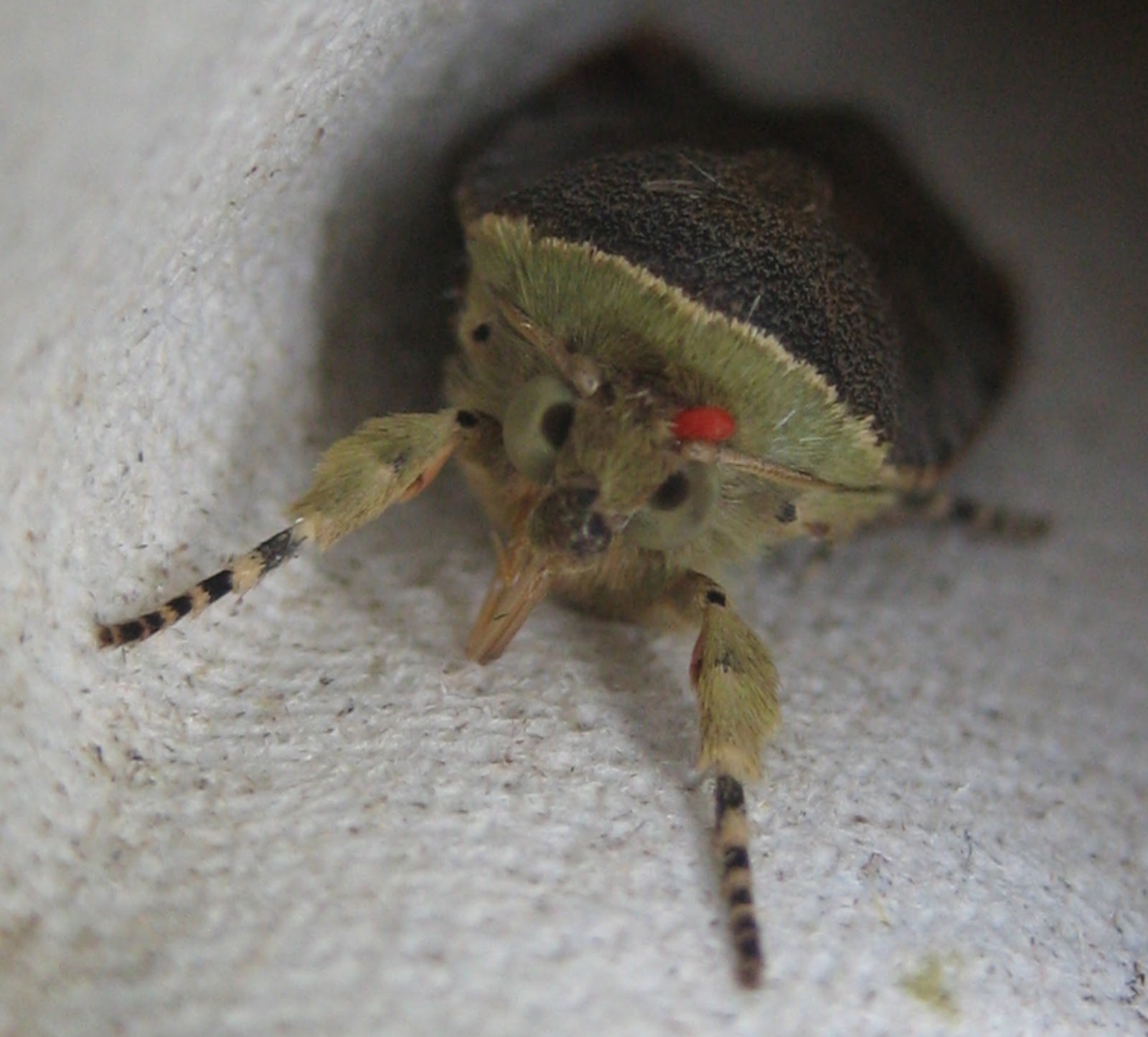
A flash of colour arrived this morning amid the muted tones which have dominated the trap for the past week: a male Orange Swift which looks freshly-hatched and handsome, albeit somewhat like a tarantula from the front. It is yet another novelty which is nice, as today is the birthday of my younger son.


The Orange Swift caterpillar eats dandelion roots which is a laudable practice in the eyes of anyone who has tried to dig out these sturdy weeds - from places where they're not wanted; I'm a big fan of dandelions when they stick to road verges or the wild and nettley end of the garden. On the whole, they don't.

The other thing which struck me about the eggboxes today, apart from two Elephant Hawks and one Poplar Hawk roosting together like a trio of pensioners (they've been coming to the trap for weeks), was the number of little eyes peeping up at me from moths' wings.  Here are a few, with a final bit of colour to end up with thanks to a Pale Pinion's choice of resting place on Penny's bright red garden kneeler.  Update: sorry, it's a Light Arches - many thanks once again to Richard in Comments.

A Common or Lesser Common Rustic with blotchy eye makeup

Copper (or Svensson's Copper) Underwing - moths which are exceptionally reluctant to flash their bright underwear, raising doubts about its purpose as an additional deterrent

Poplar Grey. There's a lot going on in the wing pattern but I hope you agree that the eyes peep out

Dun-bar. A worthy but boring moth saved from terminal dullness by its varied colouring. This version has the most distinct eyes

The Nut-tree Tussock's eyes strike me as slightly oriental, at least when seen from the side like this

And the Pale Pinion (nope, Light Arches, sorry, see above) on its  bright red couch - flagrant defiance of the rules of camouflage

Away from the world of moths, the white mallard which is a feature of our stretch of canal has hatched her brood, with three of the chicks as golden as those Easter ones made in China. I have always wondered what the people in the toy factories think of these, and of many of their other products which our offspring (or those who skilfully market to them) demand.

Monday, 29 July 2013

Bystanders

Click on the pic to check out the dew on this dainty Yellow-barred Brindle which was all but invisible on the bleached wood of a windowsill

Cooler weather and rain have coincided with a lull in moth-related excitement, with a run of the worthy but drab sort of species, enlivened by Mother of Pearls in great abundance, plus Yellowtails. This has prompted me to spend a little more time examining the surroundings of the trap, something I tend to overlook when absorbed by interesting novelties tucked away in the eggboxes.

Tough old thing; last night's OAP Swallow Prominent

The practice of moths coming near the trap but not entering it has something interesting to say about the workings of 'attraction' to light, or disorientation of their subtle navigating systems as it may really be. Below are some of my finds, which also illustrate the gradual fading of this year's first generations.

A reminder of one in its prime - the day before my birthday (May 18 remember) this year

Age comes to moths as to all else in creation, but they can bat on in spite of physical decay like sturdy pensioners. My pics above show the effects of a short but hard life on that aristocrat of the UK moth world, a Swallow (or Lesser Swallow Prominent), compared with one enjoying its salad days. Gallant battered thing, the oldie still retains the sleek lines which give it such distinction when newly-hatched. Thinking of that issue of attraction/disorientation, note that its antennae, so vital for guidance in flight, look in good order compared with the sadly worn wings.

Here are some of the other moths which were sleeping nearby:

A Lime-speck Pug on the outside of the trap's bulb-holder

A Brimstone Moth in the grass

A Carpety moth which I'll be ID-ing shortly, on the house wall. Update: CT has beaten me to it in Comments; it's a Small Phoenix. Many thanks!

A Dot Moth tucks into the window farme

While  Common Footman prefers the actual pane


An Ermine micro just avoiding a spider's web

Going bald; an ageing Peach Blossom on the window

A Beautiful Golden Y on the other side of the window frame

A Pebble Prominent on the wall

And a Broad-bordered Yellow Underwing examining our decaying woodwork; remedial sanding and painting due in the autumn

Update: And finally...   The chief indoors moth-spotter, Penny, discovered this second generation Early Thorn in our kitchen this morning, looking like an actor or actress taking a nervous bow in the footlights. It's apparently attracted to, or distracted by, a light-switch rather than an actual light.


Sunday, 28 July 2013

Hold the front beige


Beige is the colour of the blog today, and of the coffee and walnut cupcakes which Penny has made for a triple birthday celebration we're joining. I've also got an unusually large number of unresolved questions seeking answers. So here goes. Update - and the answers have come in. See Comments and a big thank you to Richard for the IDs and to Countryside Tales for having a crack.


The moth in the top three pictures is some kind of Footman, but which? Dingy maybe? I don't think it's a Common one, like the much smaller grey gentleman accompanying it in the second snap.  The Common Footman is a very familiar moth, both here and back in Leeds, so much so that I see that I haven't yet included it in the Good Housekeeping list which I'm keeping of moths seen so far this year. But I've never had such a large or eliptical one. It's the nearest moth equivalent of a flying saucer. Update: It is a Dingy Footman, but the form stramineola which sounds like a Caribbean island or Spanish musical instrument. Many thanks again Richard in Comments.


Help much appreciated - as also with this Footman, above, which seems thinner than the standard type and was hugging itself in this gauche-looking way, in the process revealing its fine yellow back legs. Update: and it is different - ID-d by Richard as a Scarce Footman (which actually isn't that scarce hereabouts).


Then we have this, above. I am more or less certain that it's a Mother of Pearl but it is much creamier, indeed much beige-er, than the standard version, of which the trap holds at least 20 examples every night.


I do at least know the seventh beige moth; a nice Scalloped Oak, and the eighth with its curious T-shape is one of the Plumes, although I will need some time to work out which. Another of my neighbours has just sent me a photo of a White Plume, a beautiful and distinctive moth which I featured last month. This one is going to be a great deal harder to pin down.


So to a Wainscot which looks new to me, and I'm plumping for a Southern because of the dots and dashes and the fact that the species is happy in areas like ours which adjoin canals. Update; no, it's a Small Dotted Buff which is at least on the same page as some of the Wainscots in my Moth Bible and related to them. Thanks once more Richard. Then we have one of last week's stars, a Marbled Beauty, plus my thumb which I'm including only because I like them so much; and a pretty little creature which I've failed to nail but am guessing is a Toadflax Pug. Update: no, it's a Red Twin-spot Carpet which I should have known because members of the first generation came to the trap earlier in the summer. A final bow for Richard and many thanks again. I think I can claim not to have been totally crass with these moths, but there is much room for improvement (cf school reports c. 1965).


Then, what is going on with this Lesser Broad-bordered Yellow Underwing and the little red dot above its left antenna and eye? The three pictures show the size and shape of this strange addition. I think from Googling that it's a parasitic Red Mite which is bad news for the moth, but any enlightenment gratefully received.


Finally, a couple of dainty micros which were sleeping close beside one another in the same eggbox, albeit with their big eyes wide open. More guessing here: I go for Crambus perlella and Agriphila straminella.


Saturday, 27 July 2013

Martin's Moorhen


I thought I'd spring a surprise today with a picture of something which is neither a butterfly nor a moth, It's a moorhen, one of those quaint birds which motor round our rivers, lakes and canals with a strange jerky motion - backwards and forwards like a rowing eight. I've often thought that a Nobel Prize awaits the physicist who can overcome that jerk in the otherwise smooth flow of a rowing crew going at top speed. Magnetic sliding seats? But I don't think the moorhen's unique style will ever change.

Look at that foot! Why in Creation was this little bird landed with that? As my bird Bible says: "It takes to the air after lengthy pattering over the water's surface and flies, rather weakly, with its legs dangling behind."


Equally irrelevant to entomology is this fungus which has attacked our plum tree, wreaking potentially great damage but in the meanwhile providing a fascinating and rather beautiful display of sap, like resin. The gardening manuals say to cut off affected bits and destroy them utterly, but I am finding this difficult because of the beguiling colour and translucency of the sap. And anyway, I don't much like plums.


Here are some dead things now. Alas, the ability of our greenhouse to attract and then suffocate butterflies is matched by the fatal effect of our windows - big and without crossbars - on birds which fly into them. This siskin - I think - is just the latest of about half-a-dozen so far this summer. Memorably in Leeds, as described in a blog post on 15 July 2009, a sparrowhawk flew into our living room window with an almighty wallop, breaking its neck and leaving a weird ghostly image on the glass.


I was talking about ants and grasshoppers the other day and complaining that Aesop had unfairly disparaged the grasshopper as spendthrift and carefree, with no scientific grounds. Here is a picture which would have pleased the old chap: ants making prudent use of a dead grasshopper. How sad.


An insect at last! See below. But also dead, one of the greenhouse victims. It is doubly on my conscience because I had a feeling yesterday that when I listed the 11 butterflies active in the garden on Thursday, I had left one out. I had and it was this one, a Speckled Wood, a beautiful butterfly whose colour and patterning is perfect camouflage in its favourite surroundings of sun-dappled shade.


I am very fond of this butterfly, which has been a big UK success story over the last 30 years. When I first reported one in Leeds back in the early 1990s, without a photograph, the local moth expert refused to believe me. Two years later, I sent him a pic of another one and by the time we moved house, they were all over the place.

Some people accuse moths of being hairy, but check out the Speckled Wood

I'm also very chuffed because a picture I took of a Speckled Wood sunbathing in a small patch of sunlight on the outskirts of Sheffield is going to be used in a report to Natural England on micro-climates. A very nice scientist found it on an internet trawl. I'll tell you more when the report is published. Yo!

A Ringlet getting a bit old, but there's nothing wrong with that

I ran the trap last night but plan a leisurely Saturday going through its arrivals without any rush. So here to end with are a few more of our current garden butterflies - plus a bonus picture of a Comma contributed by one of our neighbours who rescued it from the beak of a Spotted Flycatcher. The natural world is a cruel and dangerous place.

Large White, bane of the cabbage grower


And its deputy, the Small White

A Comma, beautiful butterfly with uniquely-shaped wings for the UK, showing the reason for its name

And another which had a narrow escape - the Flycatcher got the wing, not the body. Note my neighbour's photographic skill at getting the wing outline both in real and shadow