
 Penny and I paid our first visit for a while to the grandchildren's this week and caught up with the moths in their part of Wiltshire. They run a small actinic light with great success; indeed on overwhelming mornings here, when there can easily be several hundred moths in the mercury vapour lamp's bowl, I envy the manageability of their usual list of visitors. It is nicely varied too and usually with at least one outstanding moth among the arrivals. So it was this time, when we peeped out in the morning and saw the bundle of 'fur' in my top picture on the outside of the trap.
I was pleased that a surprise awaited the grandchildren - although the trap was given to the eldest of them, she shares it generously and the other two are interested; indeed the youngest has just enjoyed a school project on minibeasts. Their visitor is called a Yellow-tail and the two pictures below explains why.

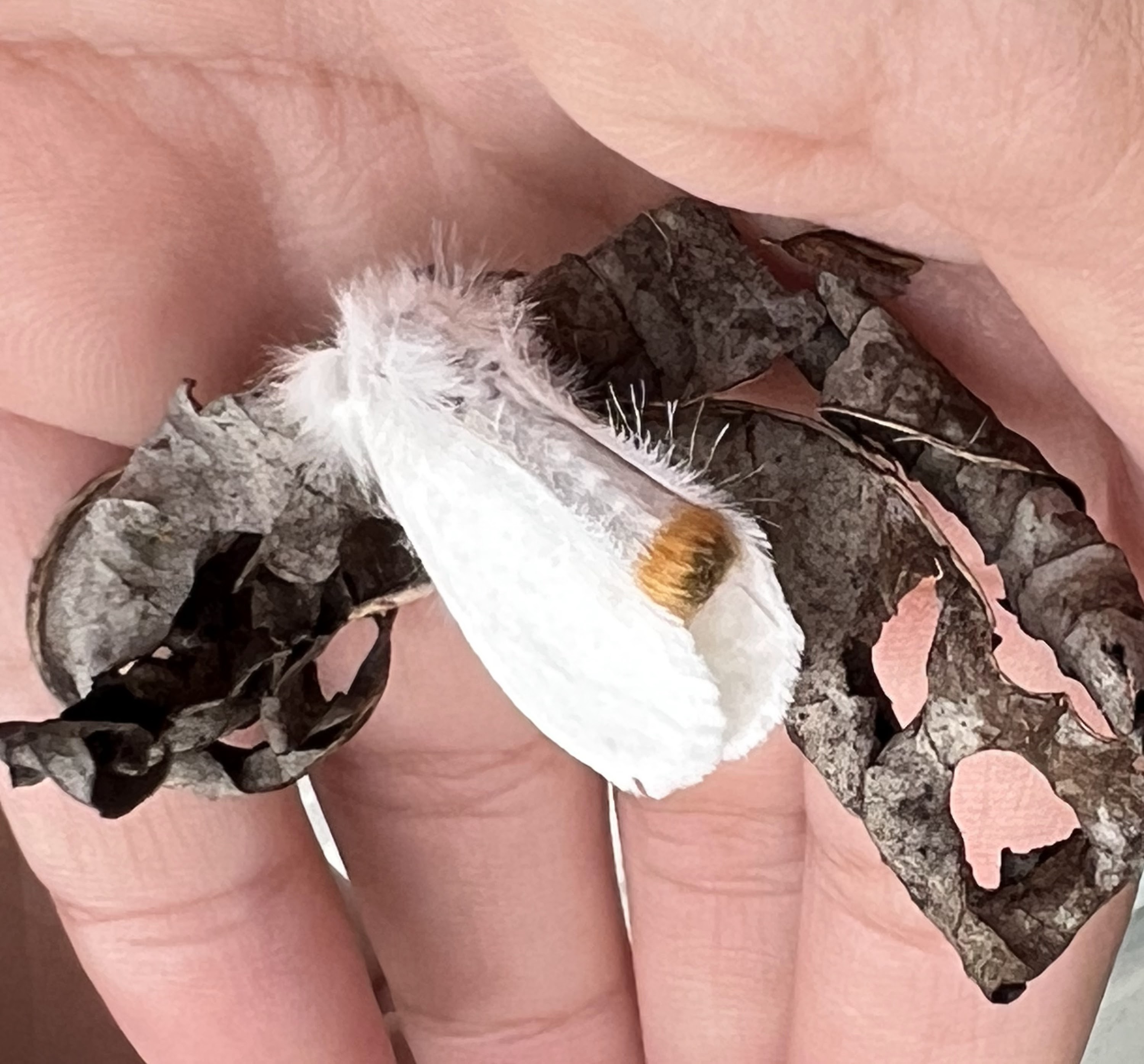
The moth's bright little brush is the property only of the female and is used to cover her newly-laid eggs for a few hours. The Yellow-tail also shares the tactic of quite a few animal species of pretending to be dead when in trouble, flopping over to one side. How effective this is, I am not sure. I don't think that it would stop my perpetually-nearby Robin from swooping in for a snack. Luckily the local birds have yet to clock on to the grandchildren's moth-hunting activities which are more intermittent than my own.

Their other visitors included both Orange and Common Footman, the latter peeping at you above, and a nice Ruby Tiger which showed off its red-breeched legs on one of their fingers. This is still a favourite practice of the grandchildren who like to be tickled by the bigger moth guests such as the Privet, Poplar and Elephant Hawks which also spent a night in the trap.


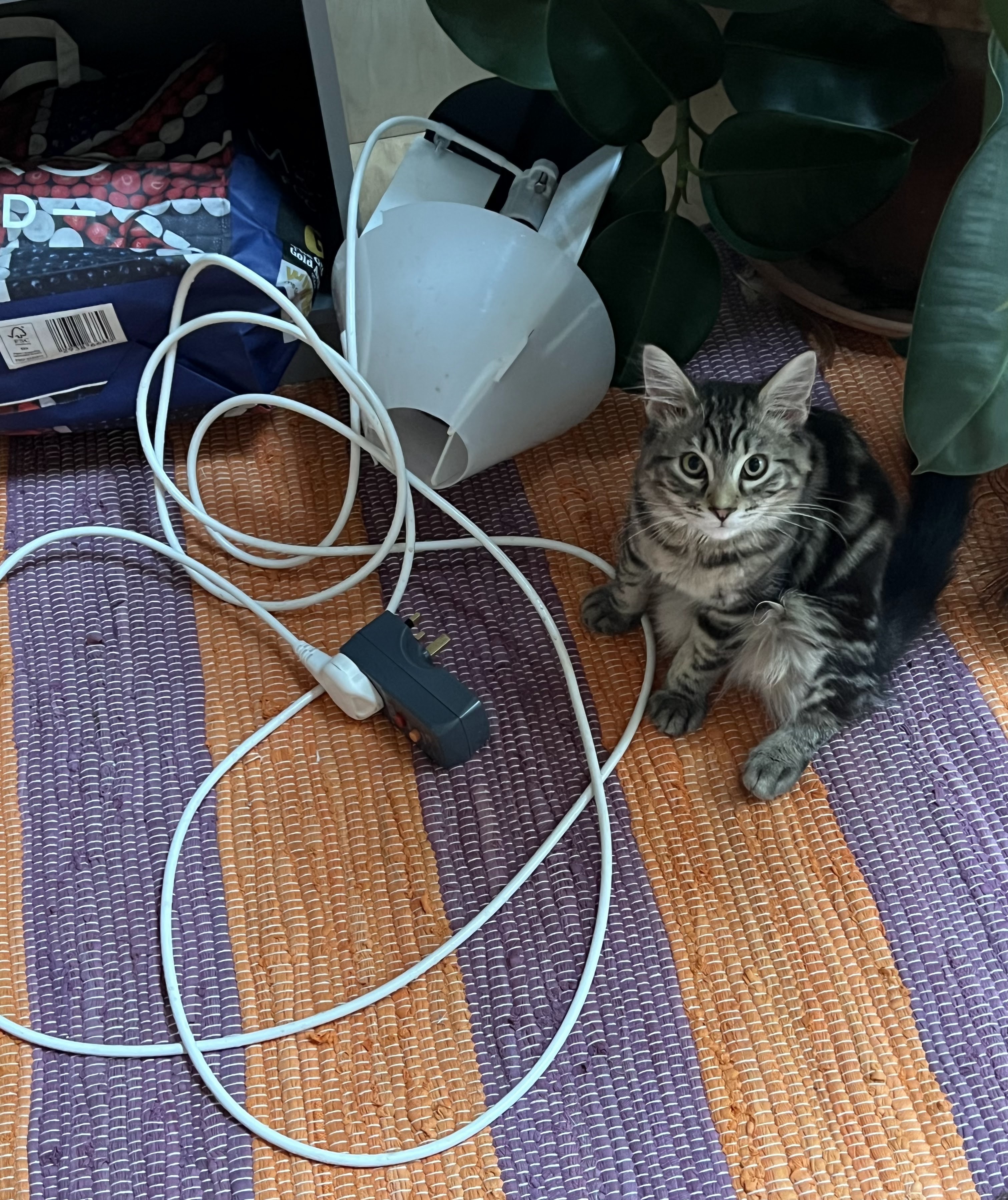
The proceedings were watched with interest by one of the family's two recently-acquired kittens who are currently a lot more interesting than the grandparents, except when it comes to the subject of moths.

Elsewhere in the eggboxes were a Heart and Dart, a Bright-line Brown-eye, a Heart and Club and a Nut-tree Tussock.

The second night we were there brought in Silver Y, Riband Wave, Dark Arches and Shuttle-shape Dart.

And look what greeted me here this morning. Not surprising, mind you. First described in 1775 by the Swiss entomologist, painter and first recorder of the Daddy Long-legs spider Johann Füssli, the moth is found throughout Europe, deep into Russia and down to India and even Sri Lanka.


No comments:
Post a Comment