Friday, 14 October 2022

Points and specks


Five years ago at this time of the year I caused a very modest stir among Upper Thames moths enthusiasts by attracting a White Speck to my lamp. Today's arrival is a White Spot, somewhat similar but more common. They share a provenance as Autumn migrants blown here from the Continent. The White Speck made landfall in my garden rather than the Isles of Scilly or Cornwall, its usual landfalls on the rare occasions when it visits the UK, because of the force of Hurricane Ophelia.


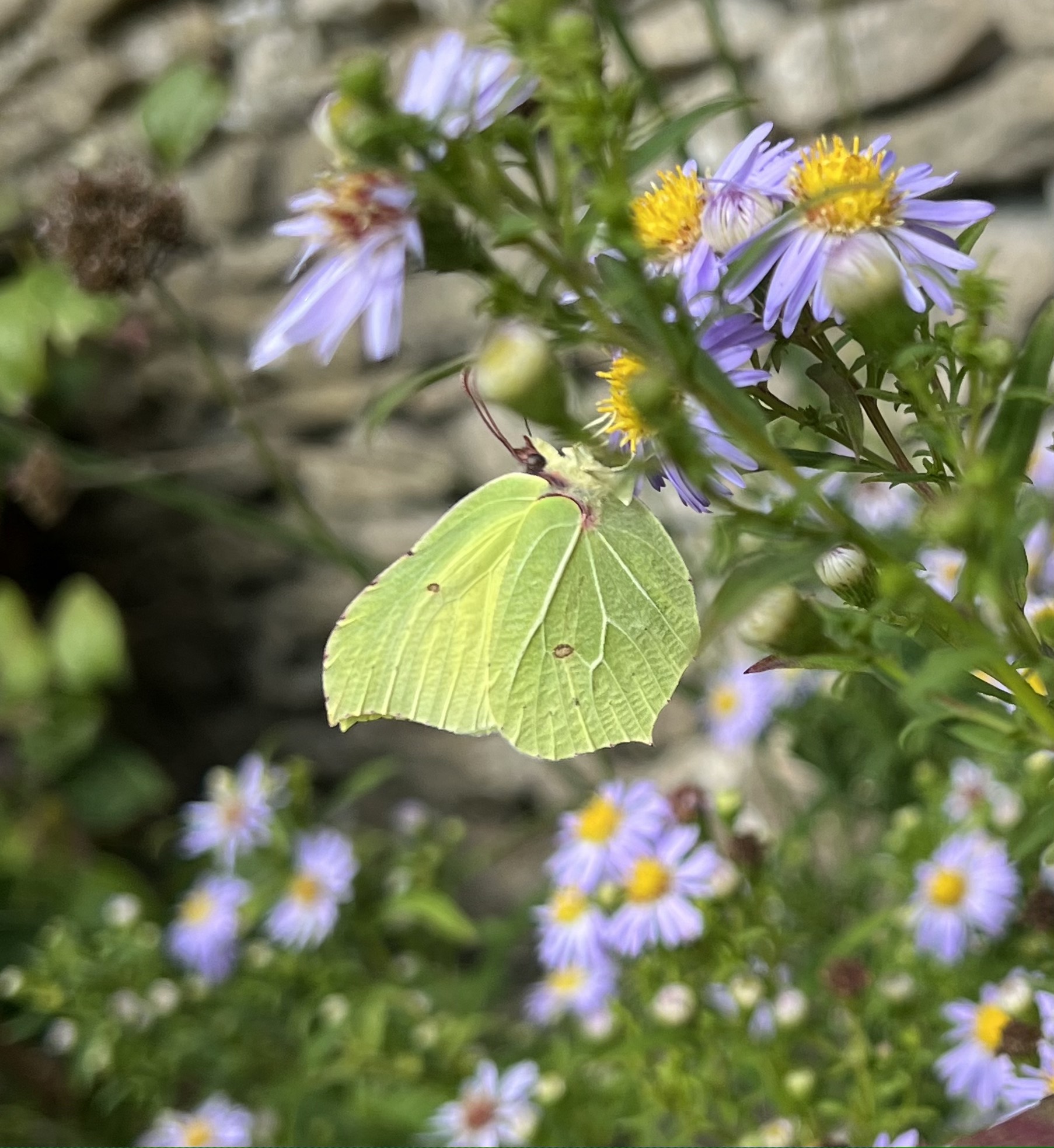
Neither Speck nor Spot is a terribly exciting moth so far as size, colour or patterning goes - how superficial am I? - but the trap continues to provide colour as the season nears its end. In my last post, I showed a richly green female Red Green Carpet as an example. Now here is its male counterpart, above, distinguishable by the white markings.
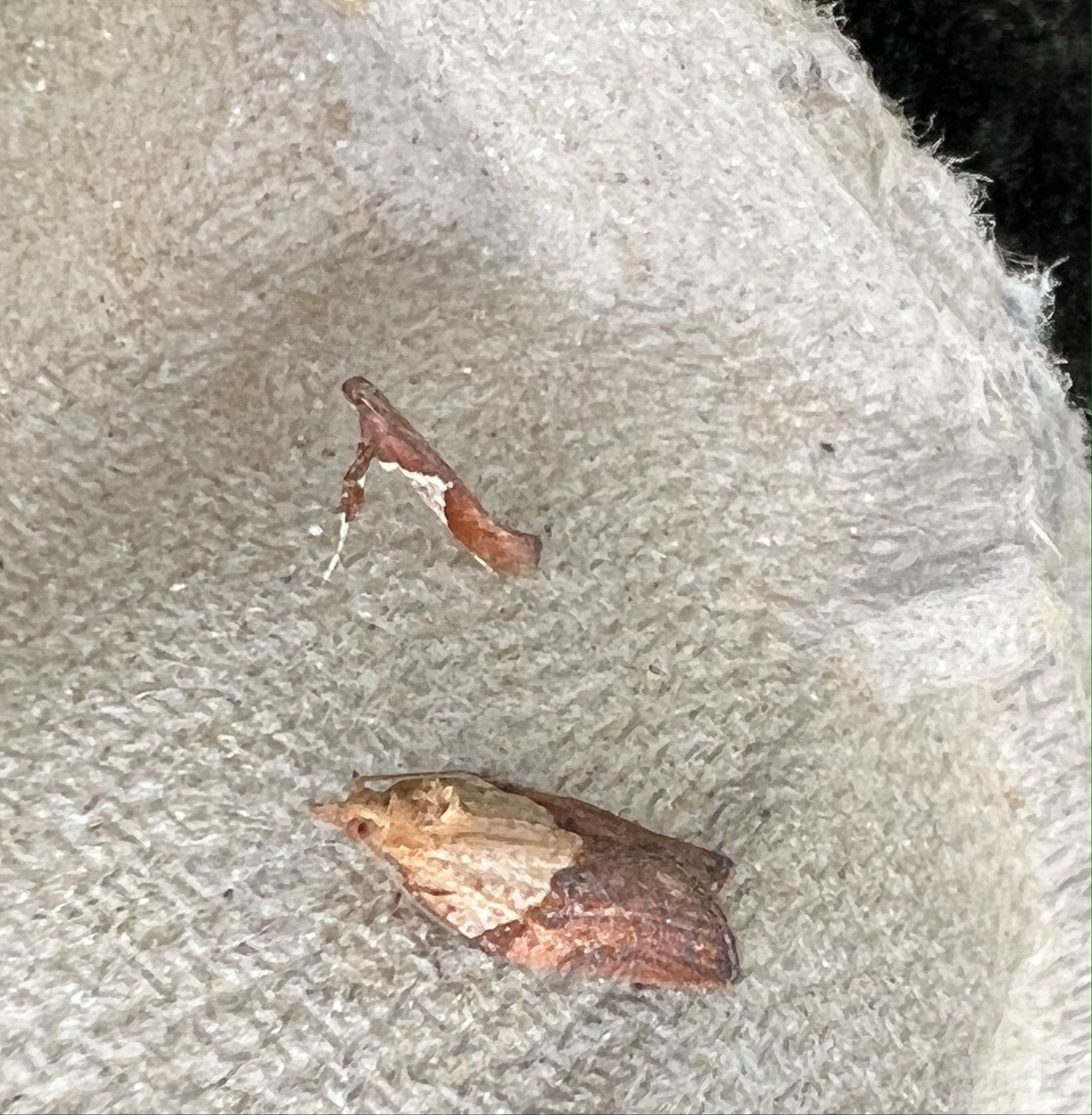

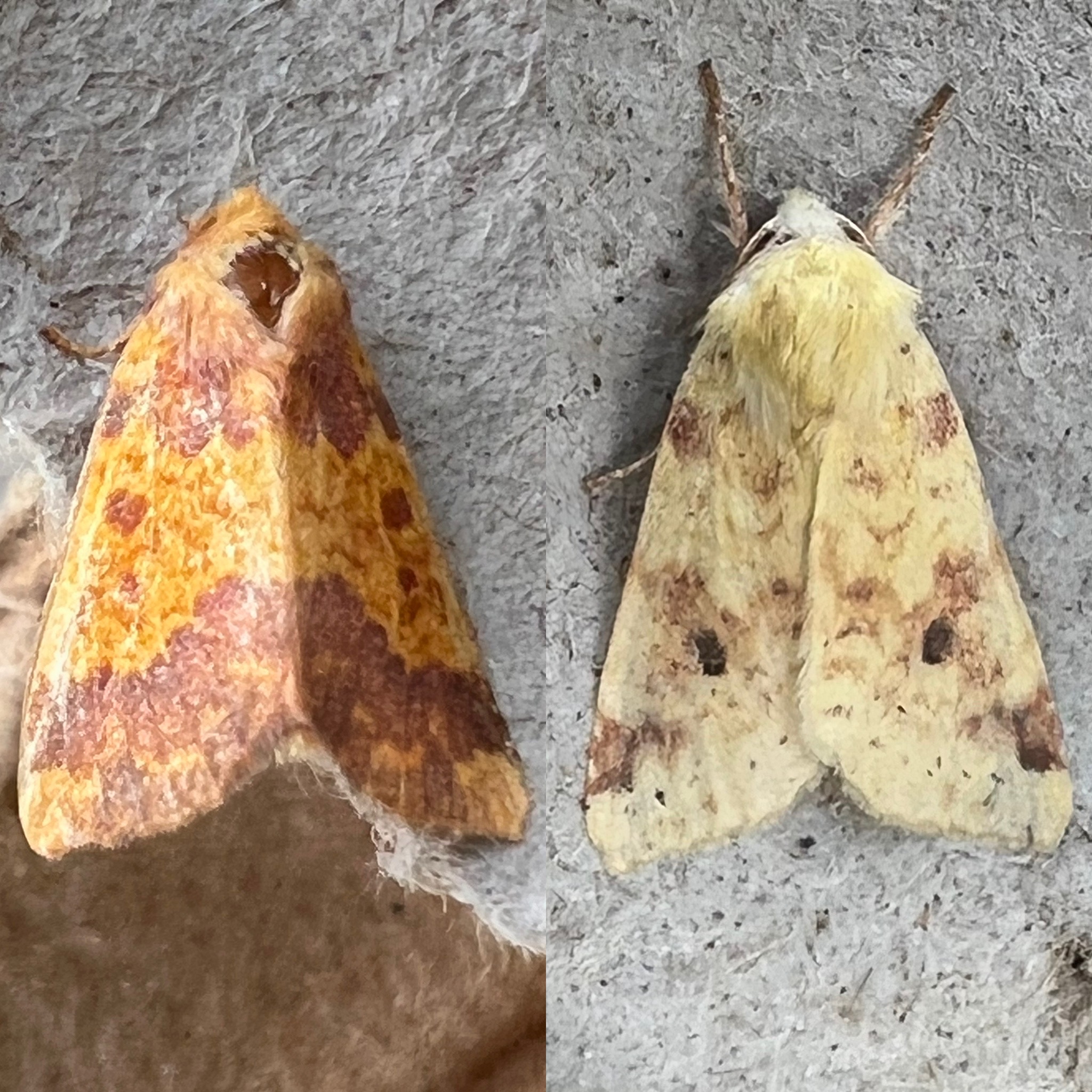
My greatest pleasure this week, however, was the arrival of the teeny tiny scrap of colour above. Micro moths normally leave me unmoved but the sheer Lilliputianism of this one was beguiling. Its larger companion with its House of Lords ermine robe, is also a micro and very small - a Light Brown Apple moth or Epiphyas postvittana. They come in between seven and 12mm long and this one was about halfway on that scale. So you can see how titchy the smaller one is. Its name is grandiose for such a scrap: Caloptilia stigmatella, and its patterning is a miniature delight.


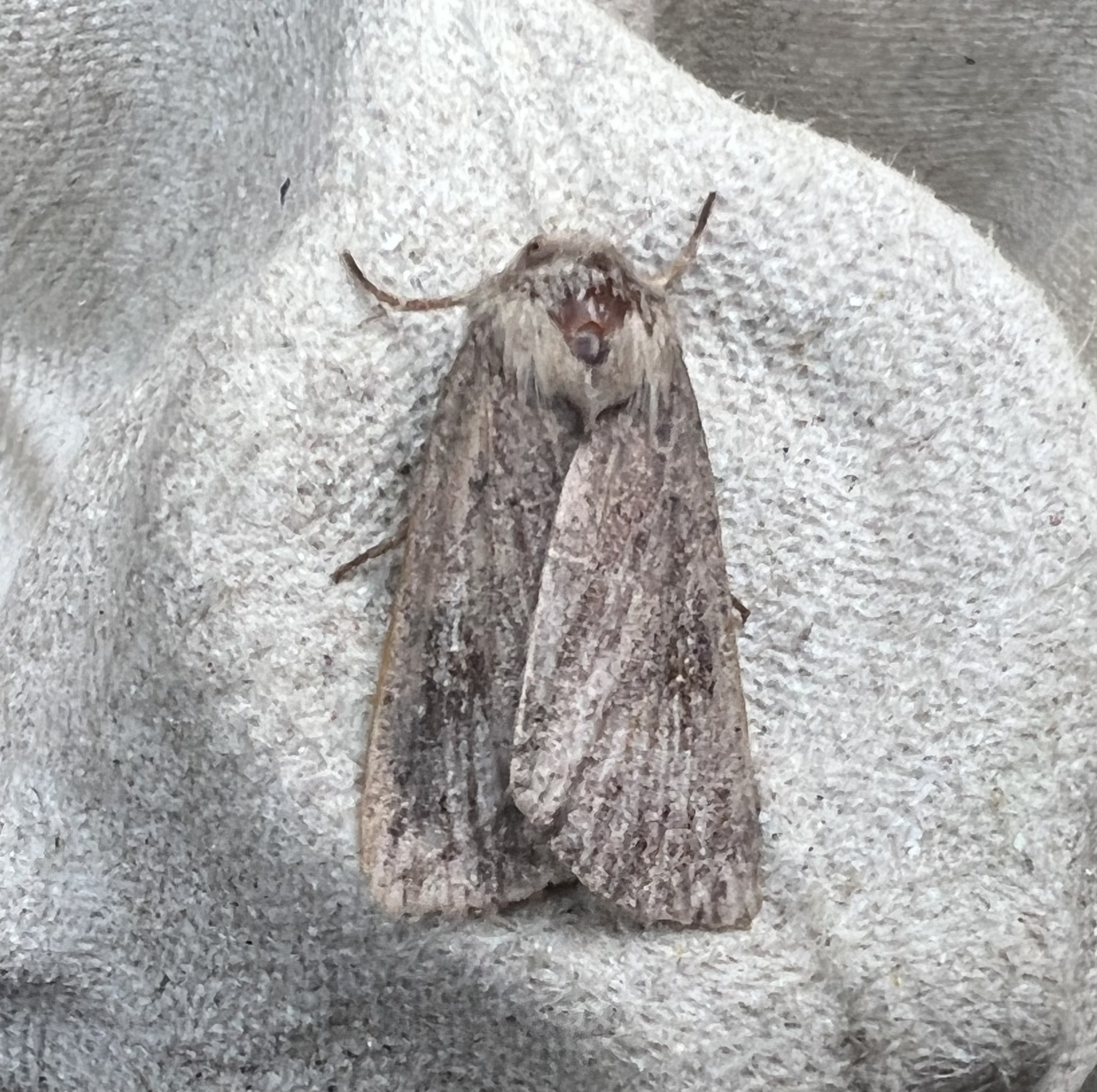
A sure sign of the end of the season is the appearance of the plain grey Autumnal, November and Winter moths and the next picture shows my first of those for 2022. They are too similar for me to tell apart. And finally we have an interesting example of moth behaviour - and waterproofing.


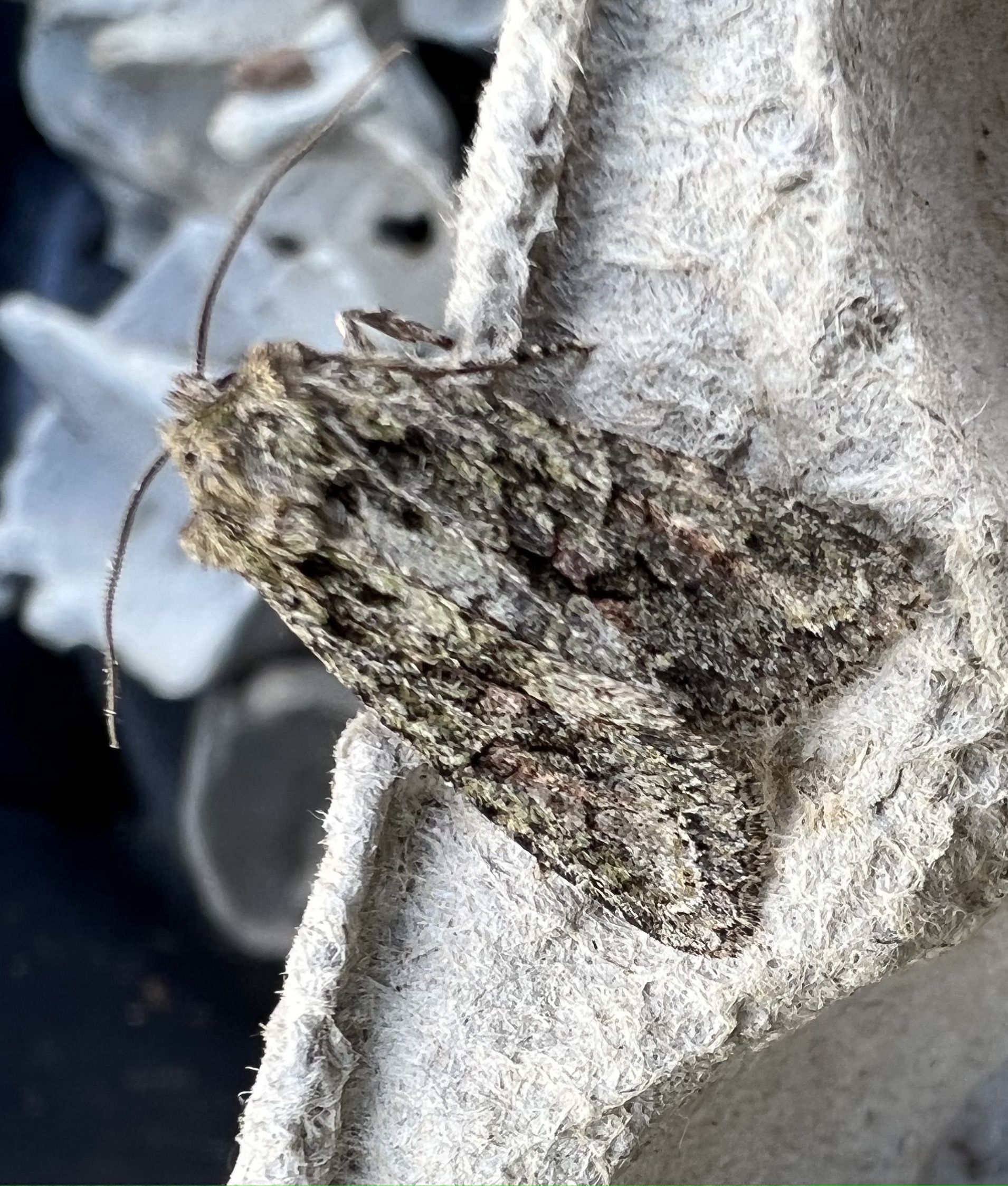
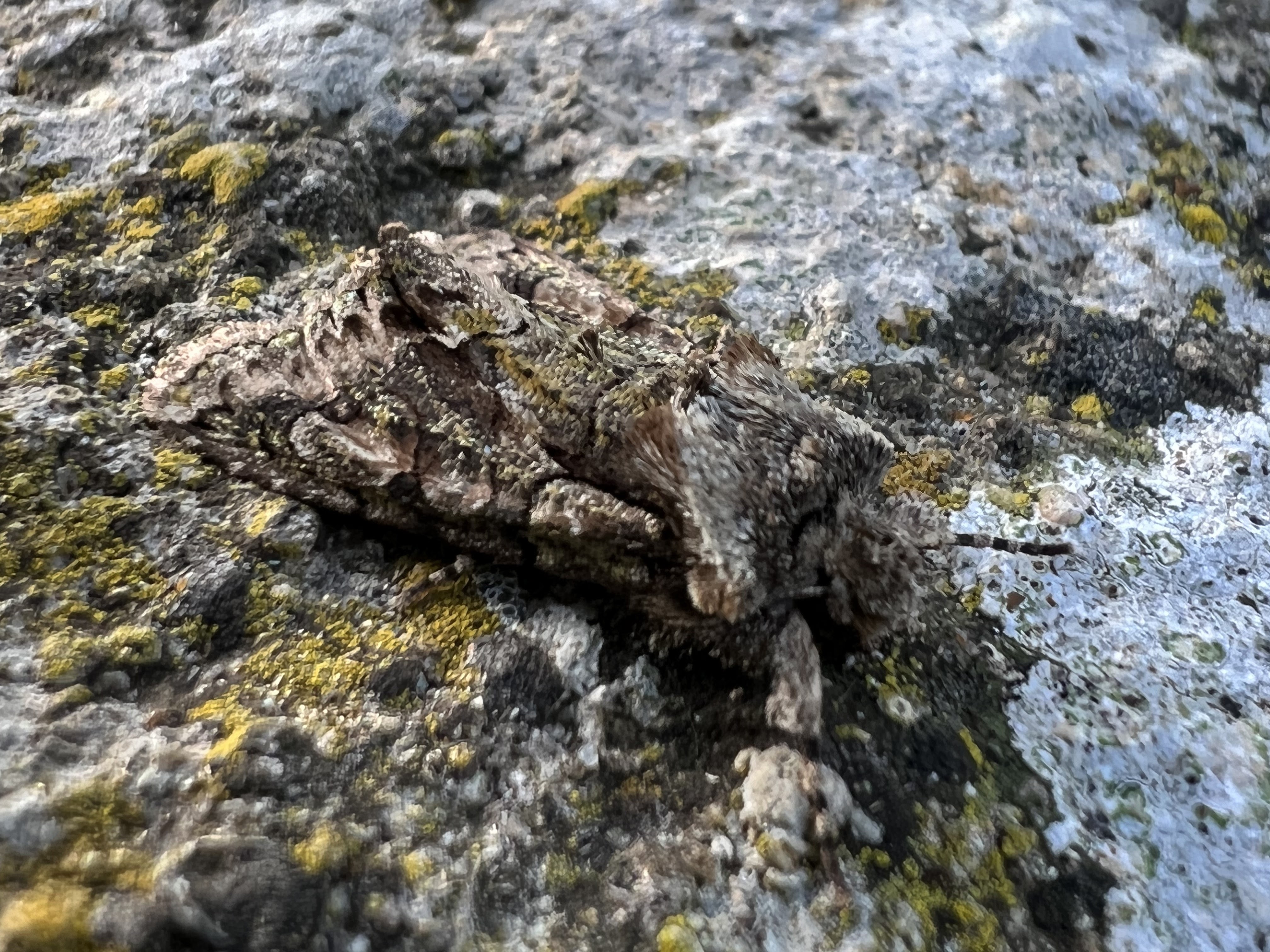
Here below is a Green-brindled Crescent form capuccino, a delicious moth whose camouflage worked well on the lichen of an old wall. The first picture was taken after a dry night at about 8.30am.  The rain morning brought rain, not heavy but lasting at least two hours. We were out for lunch but when we got back the moth was still there - below - rain shrugged off and the moth none the worse for it.
Sunday, 9 October 2022

Indian Summer


Let's start with a blaze of late Autumn colour - a somewhat battered but impressively hardy Small Copper was feasting on this marigold at the allotments yesterday, enjoying the sun of our Indian Summer. Nearby, the old well provided evidence for why we still have a hosepipe ban here in spite of recent rain. Th groundwater has a long way to go to catch up.


One of my top moths has meanwhile made its debut for 2022, the beautiful Merveille du Jour which despite its name flies only by night. It is usually the last real excitement of the moth enthusiast's year in the UK although its seasonal companions are worthy enough too.


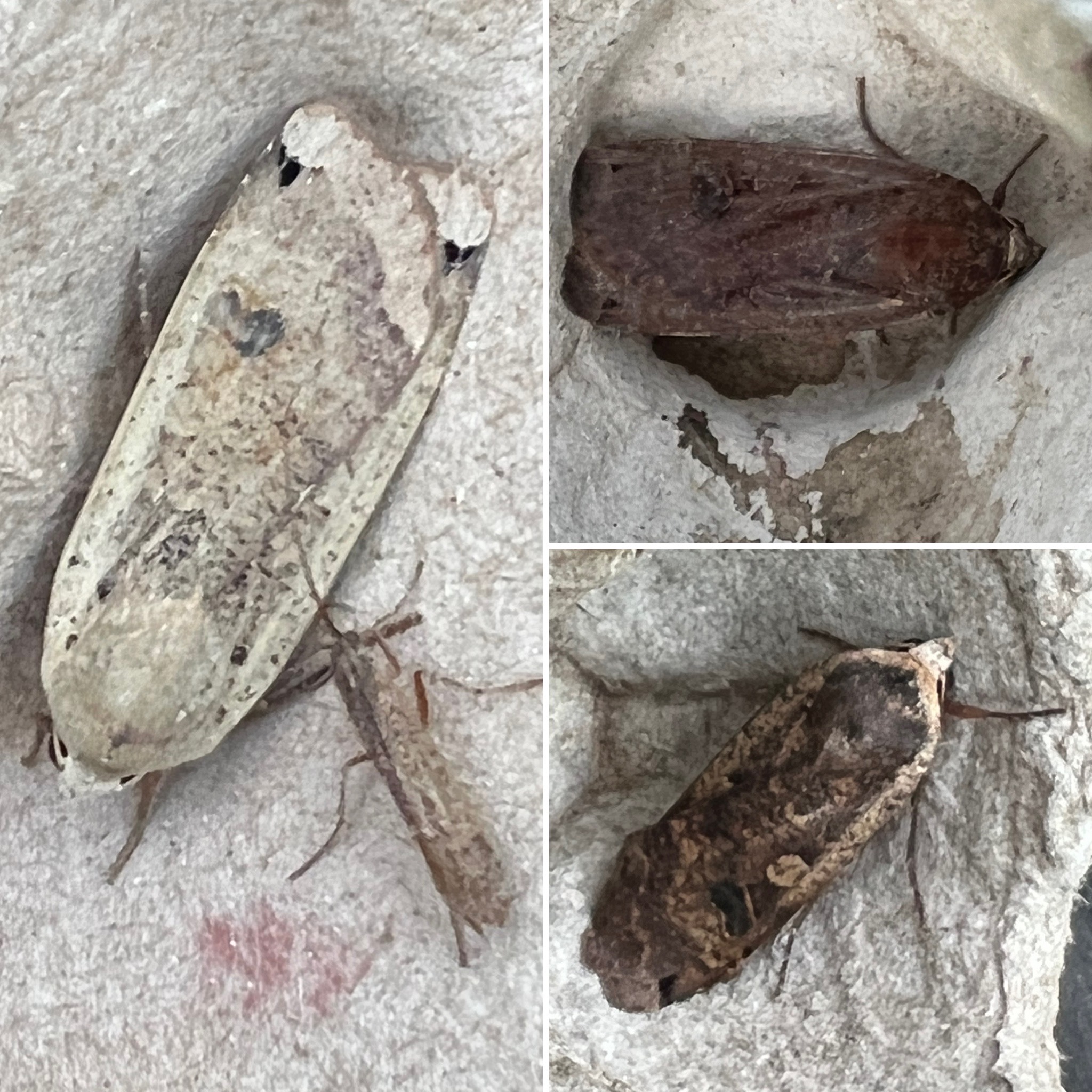
Here are some of them: a Red-green Carpet (named for its lovely colouring and pattern; its larvae are not interested in carpets or Cashmere sweaters); the capuccino form of the Green-brindled Crescent; a Sallow in the sweetcorn; a vivid Barred Sallow and two pictures of a Large Ranculus, so-named because its caterpillars munch buttercups. We have an ample supply of those and their runners spread them like fun.


These have all been of great interest to the grandchildren who are now combining their enjoyment of moths with malacology or the study of snails.


As well as these smaller creatures, we are currently enjoying the presence in the garden of a young stag which is almost tame. In the long run we will have to keep him out but at the moment there's nothing much for him to devour - touch wood. And like us, he sensibly supports membership of the EU which our home and garden maintains. 


Tuesday, 27 September 2022

Orange drops


It's turned suddenly parky so it's nice to have some warming colours in the trap. The Sallows are good and faithful providers of these at this time of the year - here's a Centre-barred Sallow (Update: sorry just Barred; thanks to Conehead in comments) and a straightforward Sallow - the scrambled egg moth - above.  The Beaded Chestnut is brown but also has a lovely orangey glow. Here are three of them on the lightbulb holder.


There are plenty of matching micros about as well, like these two which I think are both Epiphyas postvittana, the Light Brown Apple Moth. I have also made a collage of some of the moths' wings closer-up to show the variety and charm of the current visitors.


And here are a couple more composites of recent arrivals, firstly from the top left clockwise: Gold Triangle (Hypsopygia costalis), Burnished Brass, Red-green Carpet, Snout, Black Rustic with its glinting golden 'eyes' and Common Marbled Carpet:


Then a quartet of much the most common arrival, the Lunar Underwing which comes in three colourways: light grey, dark grey and light brown. The one at the bottom left was scrambling along a pavement near my grandchildren's nest, unable or unwilling to fly.


The Willow Beauty is a frequent visitor still, the Brindled Green is a very welcome, handsome newcomer for the year and the Large Yellow Underwing is lasting well into early Autumn - all below: 


Finally, I think that this next moth is a Small Dusty Wave but the other three need someone more expert to sort them out. I shall haste me to the Upper Thames Moths blog. Update: UTM and Conehead in Comments kindly ID the last one as a Deep Brown Dart and Dave Wilton on UTM nails the other two as Square-spot Rustics. He thinks my wave is a Riband while another UTM member suggests Small Fan-footed. I will puzzle over pictures of all three.


Thanks to Conehead the Commentor, however, I know that this basking dragonfly in today's last picture is a Common Darter.


Friday, 23 September 2022

Fresh and new


The year advances but these sunny September days are excellent for butterflies, many of them freshly hatched, the second generation of 2022. The male Common Blue, above, is an example and here's the underside of one of its relatives, below, also on our Michaelmas Daisies which are a terrific bee and butterfly magnet. 

Ditto this Red Admiral which was nectaring so happily on flowering ivy that it was easy to creep up and get a close-in photo. After a while, it skimmed off and did a bit of posing for the the people who look after our canal.


But here's a contrast in Commas: a fresh one from the new generation and then a battered old veteran from the year's first hatching. I know how the latter must sometimes feel...


The Brimstone, meanwhile, which is usually the earliest butterfly to emerge in the UK (hence, some say, the origin of the word'butterfly' from the 'butter-coloured fly'), is into a third or possibly even fourth generation.  This one, below, was pristine - as were the Large and Small White which follow. As someone who grows Purple Sprouting, I do not rejoice at the presence of the last two.


Lastly among today's butterflies, here is a Speckled Wood which finds our gravel drive of absorbing interest. Plus some recent moths; from the top left clockwise: Vine's Rustic (I think), Garden Rose Tortrix, Frosted Orange, Red-Green Carpet, Autumnal Rustic and Lunar Underwing. 


Finally, we often wonder what creatures make little holes in our apples which have to be gouged out before we can crunch. Here is one answer: a greedy woodlouse, caught in the act.


Monday, 19 September 2022

Delicately done


A new moth in my garden is a rarity these days, after nearly ten years of running the light trap here. One such has just arrived however, the softly-coloured Delicate Moth which is an immigrant from the Continental mainland and sometimes beyond. Scientists believe that the paler the example, the warmer the climate where it spent its egg, caterpillar and chrysalis years, In which case, this one may be a native of the Mediterranean, perhaps even the north coast of Africa.

Immigrant moths are particularly likely to arrive at this time of year, adding a belated morsel of Summer excitement to early Autumn days during which P and I carry out such tasks as harvesting our spuds and bagging a good share for the Food Bank.


In this, they resemble our Morning Glories, grown annually from seed, which germinate quickly but then dawdle about and often seem reluctant to grow until, in mid-August, they suddenly discover the vigour of that highly successful wildflower, bindweed convolvulus. The ravishing flowers only live until early afternoon although P has noticed that in the current cold spell, they have become Early Afternoon Glories, delaying opening their buds until about 2pm and lasting until dusk.


Autumn is also a time for wasps. As well as hornets, docile and solitary creatures in spite of their fearsome appearance - and sting - we have had these sinister-looking types below. I do not yet know the ID of the first but the second, composite pictures show a Sabre Wasp. In both cases, thankfully, their spikes are for laying eggs - ovipositors - rather than stabbing foes.


The hedges are meanwhile full of blackberries and flocks of seagulls are tailing local farmers as they plough. We also played unintended host to a Willow Warbler or possibly Chiff Chaff whuch flew into our greenhouse and took ages to persuade to leave.


Finally, our granddaughter sent an email requesting an ID for this caterpillar she found which, thanks to the unusual nodule halfway down its back, I was able to supply. It will turn into a moth she knows well, the sulphurous little Brimstone which often brightens up the eggboxes in my trap.