Tuesday, 2 August 2022

Holiday finds

   I am terribly behind - age and the lovely weather, sorry. So here's a catch-up from mid-July when P and I had a marvellous week in a National Trust lodge to Oxburgh Hall near King's Lynn. On the first day of the Great Heatwave, the neighbouring village of Santon Downham was the hottest place in England.


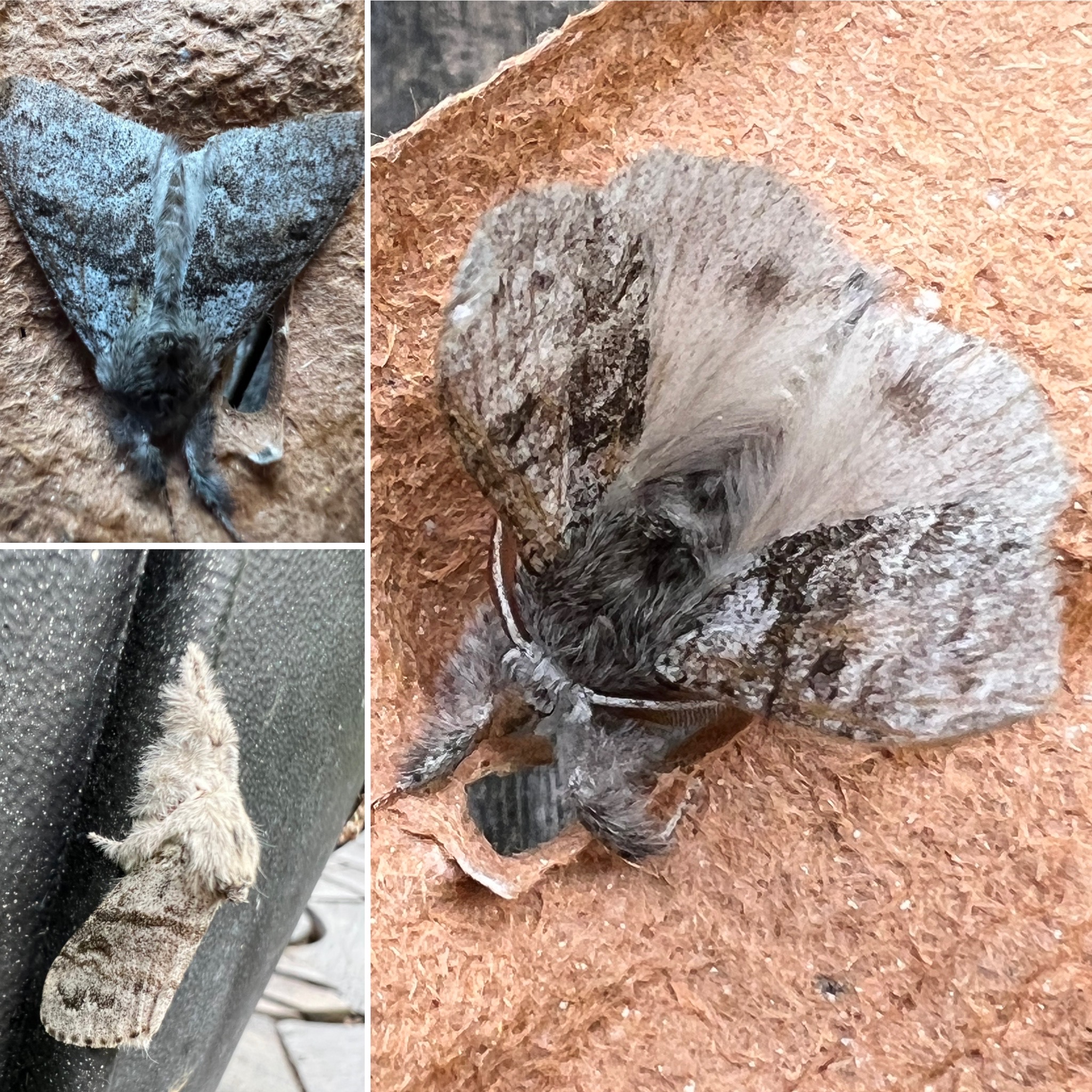
We survived. Indeed, a moated castle with foot-thick walls is a very good shelter from 40 degree temperatures, plus the National Trust café served a delicious iced coffee. Just before we went, P was drawing the curtains in our sitting room and discovered an Old Lady moth, probably seeking somewhere cool to lie up.

Digital cameras mess around with colour but actually the Old Lady can appear in all these three shades, depending on the light

   These are fine moths in terms of size but their funereal colour and patterning conforms to very outdated 'Old Lady' stereotypes. 'Old' ladies these days wear jeans and have purple hair. I've always liked the moth since teenage days when a cousin and I caught one on rum-and-treacle at our uncle's Suffolk rectory. They had two old ladies from his previous parish staying and when we rushed in yelling 'We've caught an Old Lady', there was initially consternation. It was also exciting, three years ago, to be tipped off about a hundred or so of them aestivating - summer hibernation in very hot weather - on a cool spot under a local canal bridge.


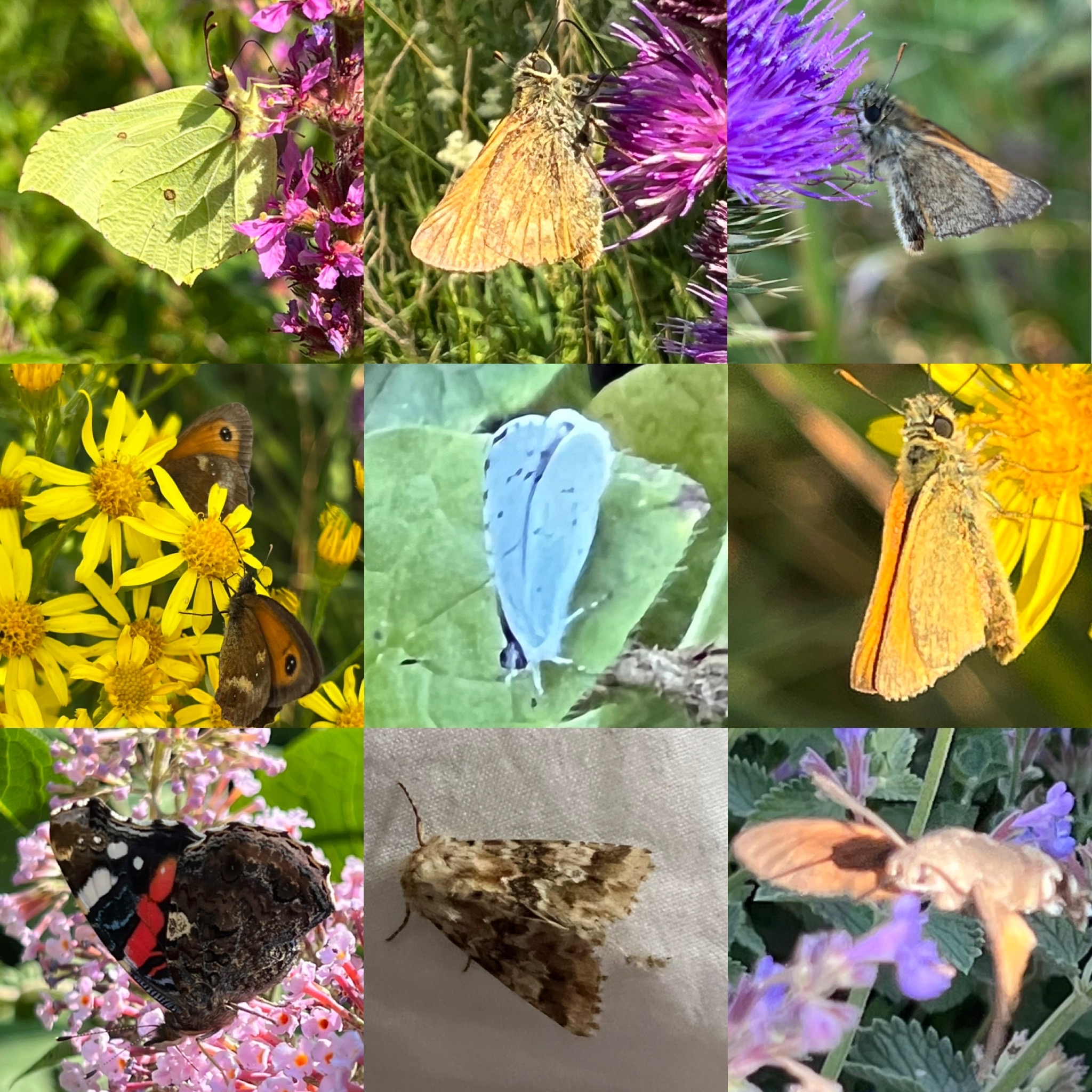
   Oxburgh and around yielded a fine collection of butterflies and some decent moths (no light trap but the lavender attracted a Mother of Pearl and plenty of Hummingbird Hawks and a Dusky Sallow took refuge in our bedroom on the hottest night). There were also lots of damsel and dragonflies patrolling the moat and streams and Pam Taylor of the totally excellent British Dragonfly Society kindly, and very swiftly, identified the one in the composite photo as a male Emperor Dragonfly and the one in the large picture below with its odd blue 'eyes' as a Brown Hawker.


   We also encountered this evil-looking but apparently harmless fly below in large numbers - ID much-appreciated from any passing dipterist - and saw a good collection of birdwing butterflies in the Lynn Museum's section of Cabinets of Curiosities, although I think the caption should read South east Asia rather than South America.. 


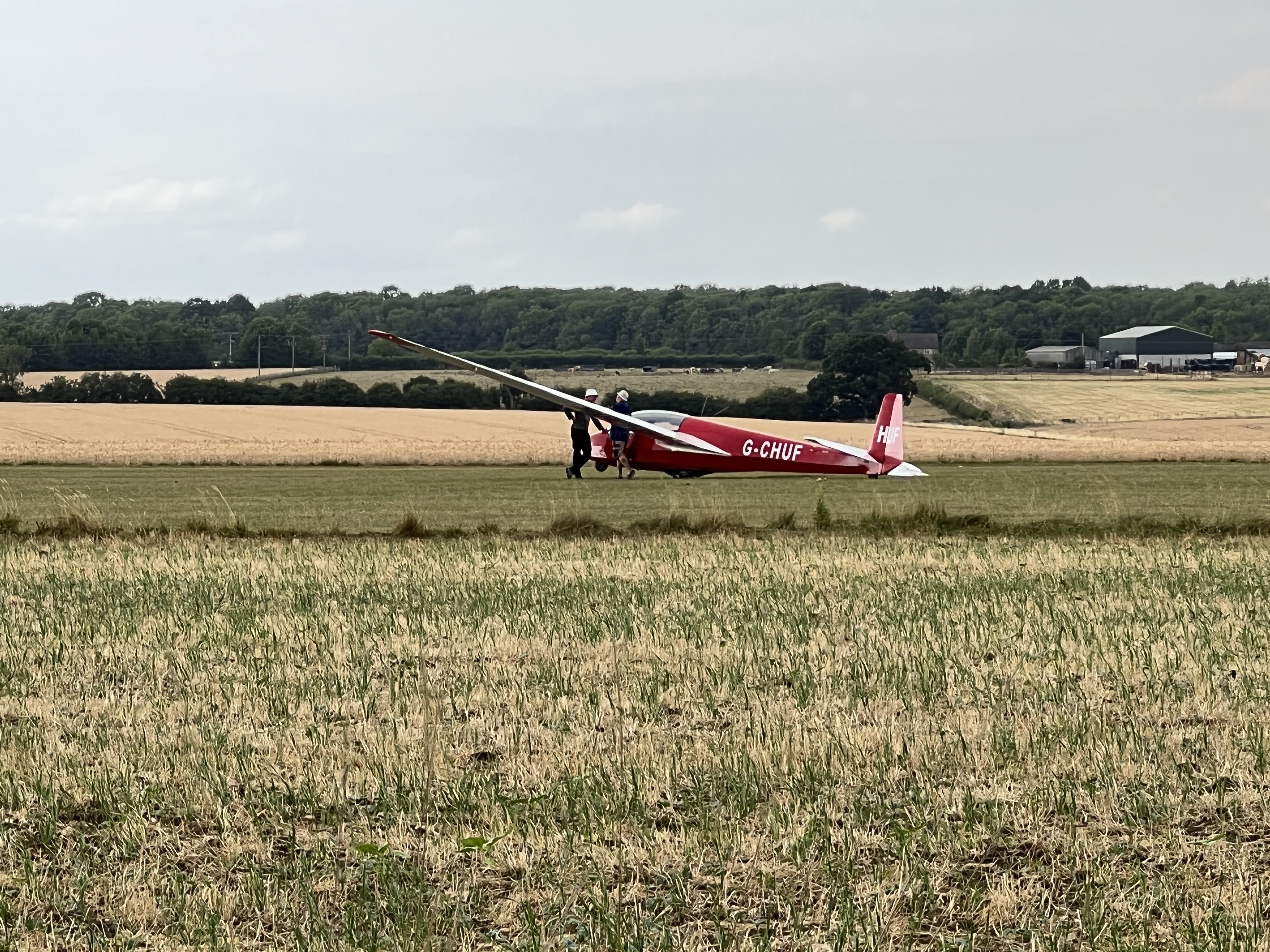
   Finally, here are some other artificial beasts and holiday views: a rare 'Peter's Pence' lectern which took the annual donation for the Pope through its beak and excreted it from its bottom; and a magnificent fish graffito - both at Oxburgh church. And then a glider, a man-made moth, just after landing near the National Trust's extraordinary Lyvenden New Bield.  The house isn't a ruin. Work stopped when its wealthy commissioner died in 1605 and has never restarted since.


Wednesday, 13 July 2022

A Hummer and London buses

 The wonderful Hummingbird Hawk moth comes to see us every Summer on blazing days like the current spell - and its calling on gardens ever-more widely around the British Isles. As I mentioned in my last post, my sister in Bradford beat me to spotting one this year and got a very good picture. We both remembered first seeing one on a family holiday near Tenby sixty - aaagh! - years ago.

 They are not easy to photograph but I managed these two shots and then took the little film below. As a friend says, the moths are tremendously industrious, no fluttering gently around like a butterfly for them.


  There have been good things happening in the wider world of my moths, where newcomers are pretty rare now that my light trap has been shining out here for ten years. Today was a London bus event when three arrived all in one go: the Brown-tail with its eponymous organ tufted just like a shaving brush, the Kent Black Arches which is neither black nor any longer confined to Kent and a Plume whose exact ID I await from the gurus on the Upper Thames Moths blog - or a kind contributor here if you nip in smartly.  It's the one in the second composite with lovely, delicate pale colouring and patterns. 


  The Brown-tail is bottom left, above, next to a Pebble Hook-tip and at an angle to a Yellow-tail, a related species which is very common here at the moment. The flying funeral envelope is a Box Bush moth whose caterpillars do indeed signal death, to any box hedge within reach.


  The mystery Plume is top right above and the Kent Black Arches bottom left. The other two are a neat Brown Plume and that intricately patterned moth the Phoenix.

Tuesday, 5 July 2022

The big guys

Hi and apologies again for the relative paucity of blog posts this season which does not mean that I've not been getting lots of moths. They are all familiar after ten years here but none the less lovely for that.

I can never resist the big hawkmoths and the largest commonly seen in the UK, the Privent, arrived on cue two nights ago. Hawks are always sleepy in the morning, even when daylight has been around for ages by the time I stagger out to check on things. So arranging them artistically is never a problem, unlike with the smaller, delicate moths which often flutter off as son as I open the lid.


There are so many moths around at the moment - July is there high season - that I am compositing them. Can you spot the butterfly? It's one which has taken me all my 72 years to meet, which is perhaps a clue.  A friend who records butterflies locally told me that she had been early to a local meadow by an oak wood and found five Black Hairstreaks nectaring on brambles. Like the infuriatingly elusive Purple Emperor butterfly, they spend far too long in the upper branches of oaks and are a lot smaller, so there's no chance of spotting them high up.

I went the next day and saw ten species of butterfly including a pair of White Admirals but was just giving up and going home for breakfast when I spotted two Black Hairstreaks on bramble, very close to local houses and a car park. My photos are far from being the world's best, but here are a couple; one with a helpful arrow and the other one bigger-sized.


You can see the distinctive line of black spots which are handy for distinguishing the butterfly from the common White-letter Hairstreak.  So, hooray!


More of my many moths now, and a closer peep below at one of them, the Drinker, whose handsome caterpillars which look as if they are wearing blue velvet like Little Lord Fauntleroy we found at school.  They climb to the top of long grass to drink the dew in the evening, giving the species its name. The moth huddles down  to rest but is a lot more purposeful when getting ready to fly.


My younger sister took this excellent photo of a Humming Bird Hawk moth in her garden, nectaring with its long proboscis. My similar efforts are usually blurs. We tend to get them every Summer but she's never seen one before  in Bradford, where she lives.


Finally, a couple of non-moths, a hedgehog scuttling about near long grass by our house and a shrew which I am sure has fallen victim to Mittens, our neighbours' otherwise very sweet cat. 


And we'll end with the Privet Hawk again, ready to take off after prolonged wake-up efforts by yours truly.

Sunday, 12 June 2022

Minor matters


I put the trap out last night for the first time in a while and the lamp shone from 9pm to 7am but with interestingly sparse results. There were only about 25 moths in the eggboxes compared with tallies in mid and late May of over a hundred. The great majority were Marbled Minors, the small, pretty and variable moth shown above - with a related Middle-barred Minor in the middle of the top row. The similarly pinkish moth in the second row is, I think, a Rosy Minor, another close relative. The moth is often described as Marbled Minor sp, for species, as the Tawny and Rufous Minor are so similar. There isn't, sadly a Morris Minor, though both Penny and I used to own one and if you have time on your hands, you can take my history of the car out of the library.  Update: Thanks very much as always to Stewart in Comments for gently putting me right.  What we actually have here from top left is a Marbled White Spot, which is not a Minor, plus three Middle-barred Minors and three Marbled Minor agg (a description because the different ones are too hard to tell apart without knowledge more specialist than my own.  Many thanks!)


A newcomer for the year in the eggboxes was the Straw Dot, whose name reminded me of this rather faded White-spotted Pug below which visited earlier in May but got lost among my photos of grandchildren, flowers and the rest of it cluttering up my picture library. Actually, I shouldn't say 'cluttering' as they include some interesting scenes such as the vixen and cubs and curious cut stems of a dead Clematis montana, below.


Also from the forgotten album, here are a couple of sleepy Maybugs in an egg cone, a bright little Brimstone moth on the bulbholder of the light trap, a contrast in black and white colouring between a Peppered moth and a White Ermine and a nice little red and black beetle.


In case you were wondering, it is perched on a cannon from the children's Playmobil pirate ship which sank in the miniature storm and was the subject of a major salvage operation. I think it's a Red-and-black Froghopper, Cercopis vulnerata.

Saturday, 11 June 2022

Multiple moths - and other beasties


For the last seven months, we have had a silent guest in the shape of the Elephant Hawk moth chrysalis on the left, above. Its caterpillar was crawling recklessly across the lane outside the pub when we found it last September, the traditional time for such larvae to leave their rosebay willowherb feeding grounds in search of somewhere to pupate. The following day, it duly did and then lay undisturbed in our shed until two weeks ago.

Now it has flown, after drying out its wings and spending its first adult day sleepily on a honeysuckle. Since then, about 15 Elephant Hawks have visited the light trap and perhaps it was one of them.  Although few will see it, the species and its close relative the Small Elephant (both named after their grey, trunk-like adult catties) are common round here.


So is the Privet Hawk, the UK's third largest moth after the Death's Head and Convolvulus Hawks, but I always find it exciting to see such a large overnighter in the trap. We didn't get them in Leeds in spite of the abundance of privet hedges against which my grandfather, a renowned horticulturalist, was a life long campaigner. He would have been pleased by the quality and range of front gardens today, although I can only imagine what he would say about Leyland cypress hedges.


We have had the usual happy coincidence of the grandchildren visiting at the start of the hawk moth season and the two get on very well together. Here are their hands, considerably more delicate than mine, bedecked with Eyed and Poplar Hawks which appear again below with a plump female Pale Tussock and a Common (but lovely) Swift.


Now is the high season for moths and they have been flooding in as you can see from the following composite pictures. I will caption them as best I can, by row, left to right. Corrections welcome as always.


Shears, Light Brocade, Willow Beauty, Heart and Dart, Coxcomb Prominent, Treble Lines, Flame and two more Light Brocades.


Green Carpets, Ingrailed Clay, unknown micro, Um, Cnephasia micro sp., Treble Brown Spot, Bloodvein,  Bright-line Brown-eye and Whitepoint.


Flame, Silver-ground Carpet, Cinnabar, Garden Pebble micro, Common Wainscot, Buff Tip (the amazing twig-resembling moth), Hebrew Character, Flame Shoulder and a couple of Clouded-bordered Brindles with a Maybug or Cockchafer.


Light Brocade (again - they are everywhere), Hebrew Character (also very common now), faded Orange Footman, Angle Shades, Common Rustic, Silver Y, Willow Beauty, Bramble-shoot moth (I think) and Orange Footman.


Here's a pug of some kind, Figure of Eighty, Middle-barred Minor and Orange Footman. 


Now for some favourite individuals - the Green Oak Tortrix micro above and the dear little Spectacle below. Did ever a moth earn its name?


Here's the smart Small Magpie micro - the actual Magpie moth has called here only once and below that the hairy-breeched Pale Tussock, the larger one a female and the darker one a male.


And finally for the moths, a contrast above between a Common Carpet (left) and a Silver-ground one and, below, a couple of decently green Light Emeralds, a species whose colour fades rapidly to an almost translucent white.


Among other beasties, here is a sinister-looking Sawfly, the final product of the caterpillar kindly ID-ed yesterday by Conehead, my all-knowledgeable adviser in Comments, followed by a bright little beetley bug of some kind which I initially mistook for a micro-moth.


I was also most intrigued by this midget visitor below when P and I were having tea and a hot cross bun in the garden. By Googling 'red and blue UK fly', I have come up with Ruby-tailed Wasp, very pretty but a nasty parasite if you are a bee. It is part of a group known as 'cuckoo wasps' because of their habit of injecting eggs into an unknowing, living host.


Equally beautiful and much more benign, here is a Common Blue butterfly encountered on a walk - common indeed but extremely lovely and agreeably willing to spread its azure wings, unlike the Holly Blue shown in the picture following. These are very common in our and many other gardens but they almost always rest with their wings tight shut.  The underwing is a lovely powder blue, but the hidden topwings rival the Common Blue's and are all the more alluring for being so seldom seen.


Before I go, here is our rare Lizard Orchid which flowers every year on a local roadside, kindly protected from parking cars by two council bollards. Also some rabbits from a huge colony in the ruins of Wallingford castle and a baby grass snake drowned by the recent rain.