Saturday, 12 October 2019

Going Large


The rain is playing pop with moth studies at the moment and the darker mornings mess up my delicate attempts to balance trap photography with making early morning tea. I sense that I will soon be storing everything away and trying to get down to updating my so-called records, a task which looms larger with every year that goes by.


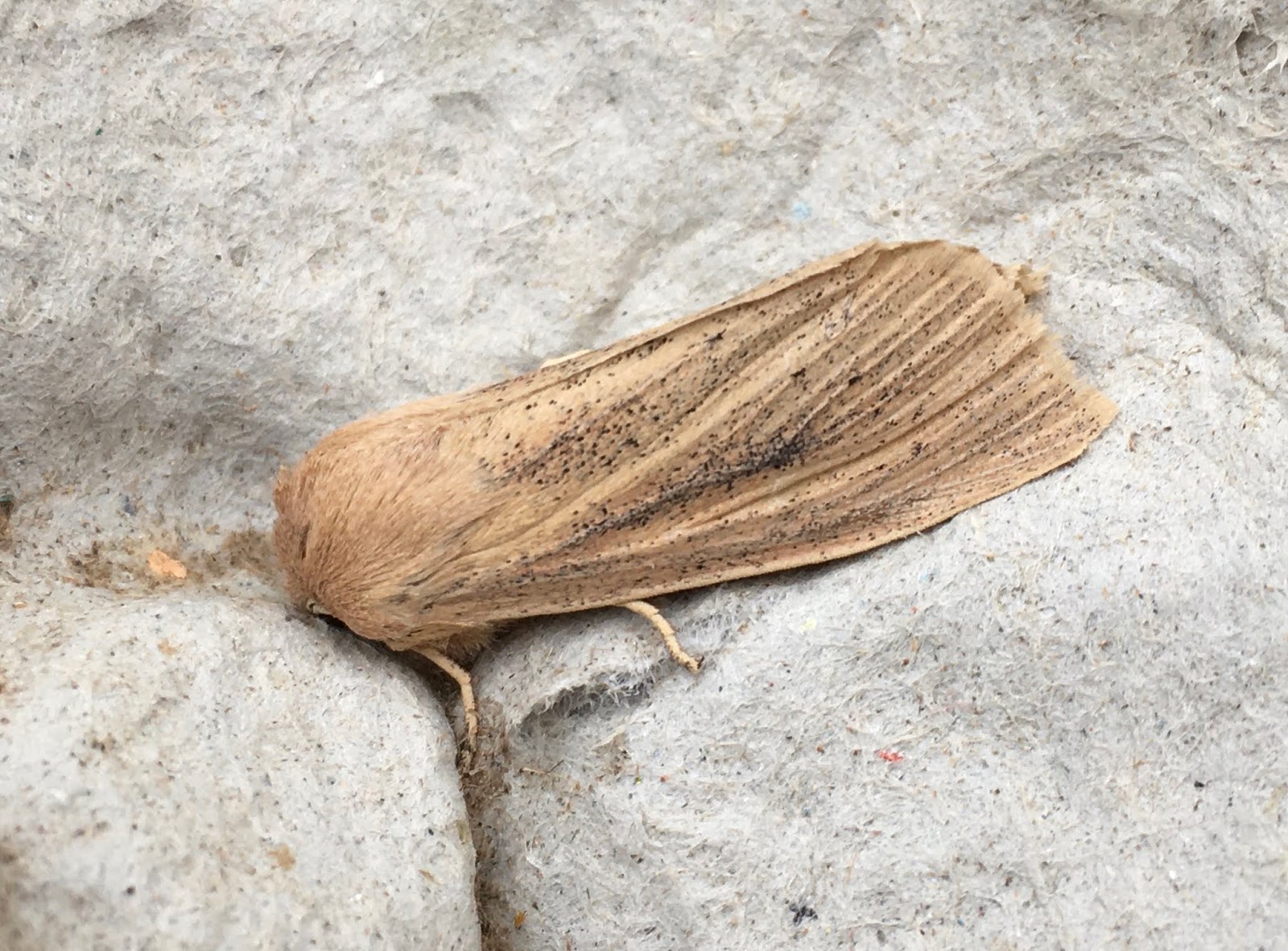
Here is a nice one, anyway, to enliven the procession of predictable Autumn arrivals: a Large Wainscot, which justifies its name. Here it is again, above and below, with its Common Wainscot cousin which has to be content with what you might call the standard size for everyday UK moths.


The weather is also taking its toll on those moths which continue bravely to fly, such as these somewhat battered yellow underwings, below. The second one is enjoying itself among some of the vast mound of apples which we turned into 21 gallons of apple juice (some of it due to morph into cider) at our village Apple Crush last week.


Saturday, 5 October 2019

Hooray for the Marvel


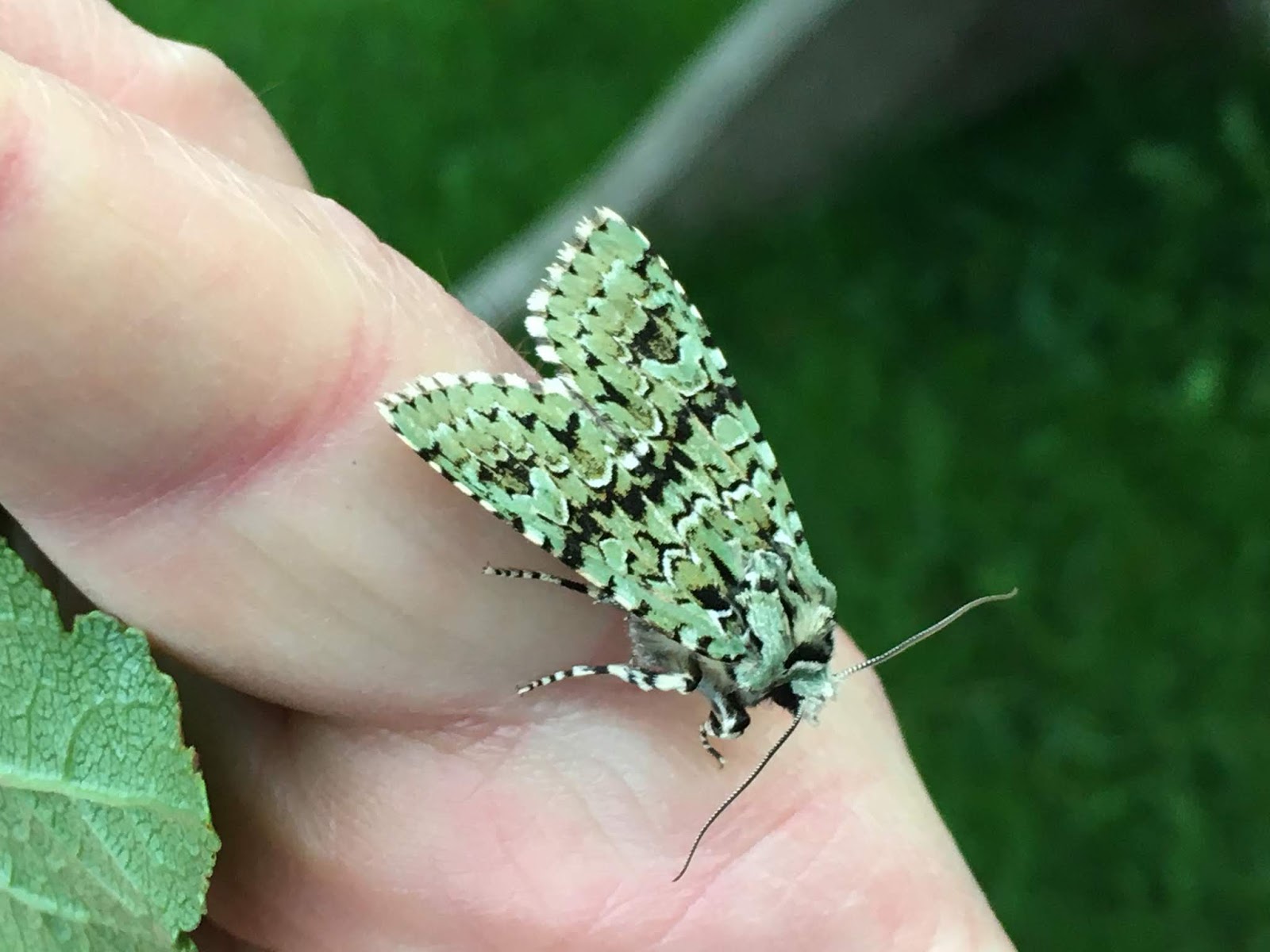
The succession of Autumn moths continues but was much more numerous last night, when the weather turned noticeably warmer. There was that annual highlight too, the beautiful and beautifully-named Merveille du Jour.

I have been expecting it but this morning initially resigned myself to a longer wait. The eggboxes had some very agreeable residents but not the glorious, complicated green pattern of the Marvel. But having got used to checking the trap's surroundings in my quest for a Clifden Nonpareils (so gloriously realised a couple of weeks ago), I had a quick look round after I had re-packed the trap to keep its residents safe from robins and blackbirds.


And there it was!  Snoozing on a garden chair which I had very nearly sat on myself to conduct my search through the eggboxes. Luckily, I had put the mercury vapour bulb and bulbholder there instead, fortuitously in a way which had neither damaged nor disturbed the moth.

It was hard to get its colour right in that position, such are the complications of our generally miraculous iPhone cameras; but they came out nicely when I tempted it on to my lovely finger. And then I decanted it into a bush and took this final photo of its delicate grey underside.


In the trap meanwhile, there were about 100 moths including, below, Top Row from left: Barred Sallow,  Dark Chestnut, Beaded Chestnut. Middle Row: Silver Y,  Red-green Carpet, Sallow. Bottom Row: Plume of some kind, Dark Marbled Carpet and another Sallow of the more simply-patterned type.


Finally, there was also this very worn Carpet, possibly a Spruce?


Thursday, 3 October 2019

A hint of mauve


The Angle Shades is one of my favourites and, more widely, one of the UK's Top Moths, judging by the number of people who find one and send me a picture asking "what's this exciting thing?" There is nothing else in the moth world like its rakish shape, with the wings slightly furled, umbrella-style, when at rest.  I am also fond of it for another reason: the presence in the outer circle of its 'eyes' of a trace of blueish mauve.  As I have often remarked before, blues and purples are very rare in our moths. Along with the incomparable Clifden Nonpareil  and the lovely Eyed Hawk moth, the Angle Shades is in distinguished company.
Its relative, the Lesser Angle Shades, is as well. It lacks the marvellous jet-fighter shape but look at its actual blue.  I haven't had one of these in the trap for a while, but they pay a visit every now and then; this one called in June 2017.


The Angle Shades is also interesting as a moth which is both resident and an immigrant and can be recorded in any month of the year. That's certainly been the case here, much to my delight. Here's last night visitor in full:


Meanwhile, Autumn regulars like the many Lunar Underwings, such as the one in the picture immediately below, have been joined by newcomers for the year such as the glowing Beaded Chestnut, in the next photo down. 


Another warm splash of colour was provided by this Comma butterfly whose fascination with hawthorn was not disturbed by our ruthless scrumping of apples for the village pressing this coming Sunday. Although the weather is dismal, there are still Red Admirals around too.


Wednesday, 2 October 2019

Daddy-o


Our granddaughter rushed in from school last week with news of an exciting insect on the wall by her front door. It seemed to her - a tremendous arachnophile - to be a flying spider. What joy!

In fact, as you will have recognised, it is that wonderfully and variously-named fly, the Daddy Longlegs - also known as the Jennyspinner, Gallinipper and Mosquito Hawk. And, much more boringly, as the Crane Fly, the 'correct' term whose origins I have yet to track down.


There are more than 300 types of Daddy Longlegs in the UK and the name is complicated overseas where Daddy Longlegs is often applied to wingless arachnid Harvesters. They are fascinating to look at, all spindly in every direction, and judging by the picture on the left in my composite above, they show every sign of continuing to flourish.


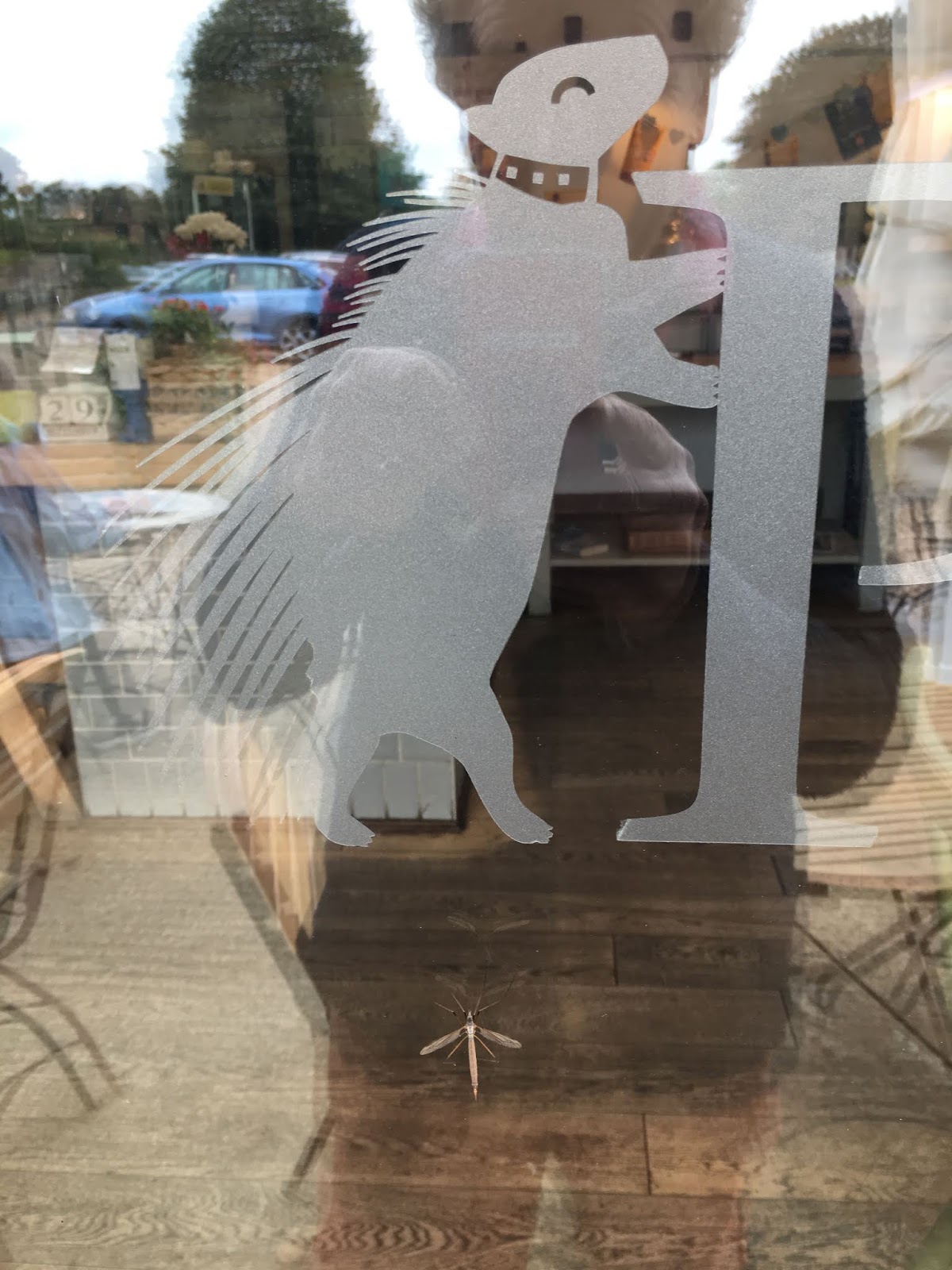
They are particularly active at the moment, emerging from their 'leatherjacket' stage as larvae during which they can do awful damage to noble lawns. On a weekend away in the Kentish Weald, we saw them everywhere, including below the engraved glass porcupine, the symbol of the Sidney family, in the cafe at their excellent stately home, Penshurst Place.

Back at the moth trap, the autumnal procession continues but in reduced numbers as the nights become colder. Below is a Wainscot, Common I think but I want to double-check those darker lines, along with a Black Rustic and  that shapely moth, Blair's Shoulder-knot.


Thursday, 26 September 2019

Autumn nights


One of the pleasures of moth-trapping is spreading the word about an interest which opens our eyes to such a rich but little-known world. It is usually children with their boundless curiosity who get most excited, but I've just had an example at the other end of life.

Every now and then, we have a group of elderly people here for tea and if possible, I organise an interesting moth for them to examine. This year, the tables were turned. One of them whose interest was triggered last year, brought along excellent pictures on her 'phone n- left - of a Poplar Hawk moth which has taken up residence in her block of flats. 
The trap is meanwhile producing appropriately autumnal moths - this year's first Black Rustics, for example, a species which I have often compared in the past to the Star Wars villain, Darth Vader.


They can be so dark that their distinctive creamy-golden eyebrow marks don't always show up in photographs. I've tricked the digital light monitor in the one below to get over that:

Next, below, is a Sallow moth, one of a family of mustardy Autumn regulars, followed by a White-point, until fairly recently a very scarce immigrant moth but one which has become a successful colonist and is now not unusual in Oxfordshire. It was in a bit of a state when I first found it while going through the eggboxes but, with a little help, sorted itself out and looked smart for the second picture.


Next we have a Lunar Underwing, another September/October species which will become a feature of the trap in the next few weeks. And finally a rather bedraggled Snout with its Pinocchio proboscis. The rain got into part of the trap overnight and the poor creature was stuck to the bottom of the bowl. Like the White-point, it recovered with a little help and, once dried-out, sped successfully off on its way.


Tuesday, 24 September 2019

Moth rescue


Walking down the canal towpath yesterday, my eye was caught by a flurry at my feet. Movement is the great betrayer of life in the wild, followed by bright or unexpected colour. The latter was present too - flashes of orange meant a Yellow Underwing of some sort and I recognised the reason for its panicky distress from previous experience.


A wasp had got it by a hind leg and, however furious the moth's attempts to shake it off, there was no way that the attacker's jaws were going to relax their grip. With the help of a twig, I intervened. The wasp shot off into the sky and the moth crept into the safety of some longer grass, below.


The trap has meanwhile being playing host to a succession of seasonal moths including, in order below, a rather delicately-marked Autumnal Rustic, a Lesser Yellow Underwing, two August Thorns on opposite sides of the transparent cowl and a Frosted Orange.


Next we have a couple of belated pictures from the Great Night of the Clifden Nonpareil - in my state of advanced checking, which I described prior to the Nonpareil's eventual arrival, I went out before bed to check the trap and its surroundings. The Magnificent Arrival hadn't yet happened but this nice, rakish Angle Shades was perched on the wall. The second picture shows the looming shadow of its photographer and his iPhone.


Finally, here are a Pale Oak Beauty and a Brimstone on the bulb-holder, a Large Marbled Carpet looking very dainty, two more Brimstones on our parsnips next to the trap that night, and a pleasantly-named Rosy Rustic.

It is now tipping with rain and the forecast is soggy, so things may be quiet for a while.


Sunday, 22 September 2019

Red light


If dramatic appearance were the first criterion, rather than rarity, this morning's arrival might well outrank the wondrous Clifden Nonpareil in many people's minds. Admittedly, the Nonpareil is also larger than the Red Underwing, today's first moth pictured above and below, but there is something special about the latter's vivid colour.

'Trifle with me at your peril,' it probably warns predatory birds; and as I write this around midday, the moth is still safely perched where I left it, albeit shuffled slightly under cover because of the recent onset of rain. It is a regular Autumn visitor but I mustn't get blasé about it. It's a very fine moth.


This one has clearly led a busy life but in spite of its frayed wings, it was in good form. When they take off, they resemble bats or small birds and that sheer size must also help to keep them safe. The upside-down moth alongside the Red Underwing in the second picture is one of the 'standard-sized/ brethren, so it gives you an idea of the scale, I hope. The little moth wasn't dead but sound asleep, even when I tapped it and its bigger neighbour out of their eggbox. Here's the Red Underwing as I found it, below - their usual resting posture which is perfect camouflage on a wall or tree.


We are apparently in for a wet week now but the sunny spell brought out tremendous numbers of butterflies. It's been a very good Painted Lady year and here are some of our other regulars: two Speckled Woods, a Brimstone (second generation) and a pair of Commas, showing the punctuation-based reason for their name:


Assorted yellow underwing moths have been plentiful for ages and here is an example of how snugly four fit together in an eggbox cone. Then we have a quartet of pictures of one of my favourites, a Burnished Brass whose wings get blurrier as it warms them up ready for take-off: