Wednesday, 14 March 2012

King of the castle


Moths settle in the trap in all sorts of curious ways, or sometimes just flop on its base, right way up or upside down, like drunks or children who have keeled over and gone to sleep. A favourite habit is to creep right inside the cones of the eggboxes which is what I think I would do. But this Small Quaker is an exception. Unusually, it chose to kip on the tip of a cone. It looks as though it's clinging on rather desperately but was actually was sound asleep and remained so when I tapped it gently off into the gloomy safety beneath a rhododendron.


Pug moths on the other hand favour the outside of the trap; sometimes the transparent cowl as in Monday's picture and sometimes on the black plastic bowl like these three. They are much lighter sleepers and, almost alone among my regular visitors, often flutter away before I have the chance to photograph them.

Tuesday, 13 March 2012

Something old, something new


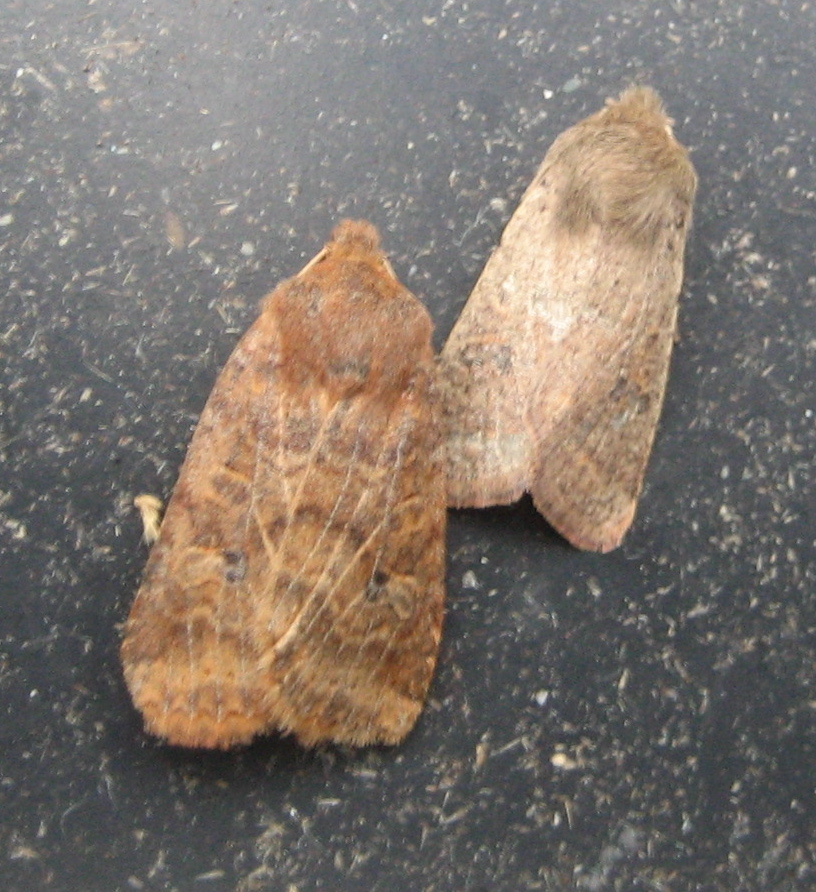
Our warm, early Spring is bringing in two types of moth: newly-hatched ones, for whom 2012 is their first (and in most cases only) year; and bedraggled veterans of autumn, staggering out of hibernation like students following a heavy night out. This worn-looking creature seemed to be one of the latter; but in fact it's a Dotted Border, a species which takes wing for the first time in February, with occasional bold individuals hatching from December onwards.


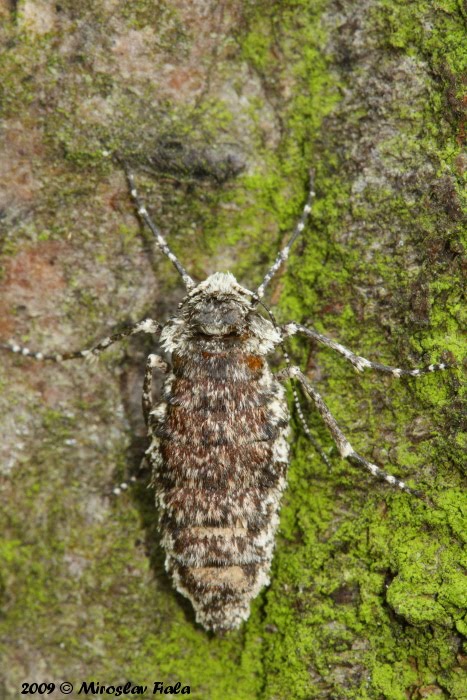
Perhaps this is one of those. Certainly it is male because the female is one of the curious beetle-like variety described in a couple of posts last week, one here and the other one here. At least she has slightly more of an attempt at wings, but I'd still rather see than be one. Here she is, above, courtesy of the Moth Bible.


One of the newly-hatched varieties at this time of the year is a completely different matter: the handsome Early Grey which excited me a couple of years ago when, as my trapping crept back earlier, I saw one for the first time. I made the obvious joke about tea in the post at the time, so won't repeat it now. But there will be plenty more of them over the next few weeks.

Monday, 12 March 2012

The very sleepy caterpillar

Yesterday was the warmest day in the UK so far this year, and the trap had a good number of guests this morning: 32 Quakers, mostly Small I think after Ben Sale's comments on yesterday's post, a 'white' marked Satellite, a Hebrew Character and another Oak Beauty; oh and this Pug moth which I will try to identify later. I've already got one such on my pending list from last week. Update: I think they are both Brindled Pugs.


There didn't seem enough to warrant a post on the blog, but then I lifted up the trap to take it in and saw this:


a caterpillar enjoying the safe, moist gloom provided by the big bowl. So here's another challenge to my feeble powers of identification. Waring & Townsend provide some photographs of moth caterpillars and I will look through them tonight.

Unless, that is, a caterpillar expert chances on this post in the meanwhile... Here it is once again, for luck. (And see stop-press, below the picture).


Some hours later, falling asleep in front of the ten o'clock news: I have it. It's a Large Yellow Underwing caterpillar, I'm more or less sure. We certainly have plenty of the adult insects come the summer.

Sunday, 11 March 2012

How do you do?


As forecast yesterday, the planned meeting between moth and babe took place and here is the official picture, above. Both survived intact and the Oak Beauty is now at liberty somewhere (or in a bat's digestive system because moths' lives are hazardous and short). Rufus is asleep after our first baby-sitting evening for many years, which was lively but very enjoyable.


While still in thrall to this particular moth, here are some detailed pictures of it: first a close-up of that lovely patterning and second a bumblebee-like glimpse of its furry head and furled antennae. The latter shows that, like most of the OBs which come to light, this one is a male. You can make any of the pictures bigger by clicking on them once.

Elsewhere among the eggboxes, the catch was a classic collection of smaller brown and grey moths of the kind which make me dizzy as I blunder through my guide trying to tell them apart. I hope I have got them right. For all their similarities, each has a beauty of its own, even the Dark Chestnut (or possibly Small Quaker) whose extremely discreet patterning defies my photographic skills. I'm listing them here largely for my own records, but do plough on if interested.

Update: the world's kindest monitor, Ben Sale, has put me right on my initial identifications and I've added his corrections below (leaving my initial mistakes because it interests me, and maybe others, where I go wrong).

Common Quaker

Chestnut and Ingrailed Clay. No, second one is a Small Quaker.

Another Common Quaker, with different colourway. No, it's a Clouded Drab (sad name, eh).

Dark Chestnut (or is it a Small Quaker?); either way, the Cinderella of the party. Yay it is a Dark Chestnut.

Hebrew Character. The name comes from the similarity of the dark marking to the Hebrew letter Nun, as I have discussed in remarkable detail in past posts

Lead-coloured Drab. With names such as that, no wonder some people aren't interested in moths. Not that the poor LCD is very interesting (except that its acronym is the same as that for Liquid Crystal Display, maybe). Warning: this may alternatively be a Clouded Drab, which sounds scarcely more appealing. And actually, after all that, it's a Small Quaker, deceptive little beasts.

Powdered Quaker (I think; or it may be a Common one). No, it's yet another Small Quaker.

Small Quaker

An interesting one to end on. These are both Twin-spot Quakers in spite of their very different colourways. I don't know the reason for this range of variety and hope to find out. I suspect that it has something to do with camouflage and natural selection.

Saturday, 10 March 2012

Oak, what a beautiful morning

Happy times. I could get used to this trapping-in-March lifestyle. Just the other day, I featured the lovely Pale Brindled Beauty. Now look at this.


Mulling over my moth Bible betimes, I have often lingered on the picture of the Oak Beauty and said to myself (and sometimes aloud to Penny): "Ooh, I would love to see one of them." Now I have, and so have you, because this is one and it came to the trap last night.


It is still here at 11.30am, slumbering in its eggbox hidden in our recycling bag for tins, because I want to show it to a tiny cousin who is bringing his Mum and Dad to stay for the weekend. It seems to me a paradigm of the virtues of moths with its intricately wonderful pattern which is all the more attractive for being understated. Look how big it is though, compared to the 'standard' moth alongside in the picture above - a Common Quaker I think, whose plain but agreable pattern makes a good foil.


Would you believe, the Oak Beauty is a common English insect at this time of the year? Yet, at 61, it is the first time I have ever seen one; and I don't imagine more than a few thousand of my countrymen and women have either. Never let anyone get away with being world-weary. There will never be a shortage of things to find out.

Friday, 9 March 2012

Hooray for women!


Here's my tribute to International Women's Day, with apologies that it comes a day late. This particular woman lives in one of our geranium pots and here she is peeping at a Satellite which arrived last night. I can't say that the moths themselves put on a special effort in honour of the occasion but there are plenty of them for so early in the year: 23 altogether, and I'd sited the trap in a rather obscure and bosky corner of our domain.

Brown, grey, maddeningly similar, Oh dear, not my favourite sort of morning, and I haven't time to check them out thoroughly at the moment. I've had a quick scan at the depressing pages which feature Quakers and Drabs but identification will have to wait until this evening or possibly tomorrow.


Certainly one of them, left above, is a pug, maybe a Brindled one. And I think that we have Chestnuts and Common Quakers in the mix. Apologies for the blurry focus; the mornings are still a bit dark. Anyway, well done women everywhere, and battle on. Penny and I were watching the new BBC TV series White Heat last night, which starts in the 1960s, and marvelling how far we have come. My eyes still mist over nostalgically at the thought of the Sixties, mind... Old hippy.

Wednesday, 7 March 2012

Lighting up London

Here's an exciting prospect: as part of the Guardian's famous Open Weekend - lavish details here - I am going to be running my moth trap (or 'Martin Wainwright's moth machine' as it is called in various internal memos about health & safety etc) on the roof of the imperial headquarters at King's Place. I have posted a photograph of this looking normal above, and below is an impression by an artist with limited computer skills (me) of what it may look like on the night of Saturday, 24 March.

Next morning, I am going head to head with my colleague Patrick Barkham who wrote an excellent book last year - info here - about his love of butterflies, but is also a heretic who believes that these gaudy flibbertigibbets are superior to moths. Please come and join in, if you are anywhere near London. Much else is going on. Details here.

Here it Leeds, it rains and so the trap is having a rest before its great metropolitan foray.

Tuesday, 6 March 2012

Fly away home, ie to Minneapolis and places like that

Apologies to moth purists, but after yesterday's Focus on Slugs, we have ladybirds today. This is prompted by scrolling back through the blog, idly, and coming across a reference in November to the number of big black ladybirds we were getting. I promised to return to the subject but never did. So now I will.

For some reason, the ladybird became a symbol of our house in Leeds, long ago. We nailed a couple of those jumbo wall-decoration ones up in the Virginia creeper, my younger son painted a huge one on our burglar alarm and there are various cuddly or pottery ones indoors. I can't remember why.


Anyway, the real things latched on some years ago, and now they are everywhere. Their numbers have also vastly increased with the unstoppable spread of the American cousins. It's grey and red squirrels all over again, and I few that the daintier English versions have little chance. Not that all the American ones escape our spiders; see picture below. Yes, our bedroom does need redorating.


Maybe the two species will mate and produce a middling compromise. In the meanwhile, one slightly reassuring thing is that red ladybirds are holding their own in terms of numbers, even if they are American (sorry Sarah, Banished and other US-based readers; I love America, I promise). You can read lots of interesting stuff on this website about ladybirds in general and the US invasion in particular. Here in conclusion is one of the many foraging ladybirds which leave the window clusters, examing my swimming trunks.

Monday, 5 March 2012

Sluggish

Talking of flightless females, as we were, suddenly reminded me of a strange object I photographed in passing in the trap. It was small and shaped like a jelly bean but with more pointed ends. Could it, I wondered, be a female Pale Brindled Beauty which had crawled to the eggboxes to be with its handsome husband.


Alas, no. It was a slug. And if moths suffer from a bad image with some people - all that nonsense about crawling into ears etc - slugs have a truly awful one. They just aren't very appealing; and I regret to tell you that my twin uncles, who both later took Holy Orders, used to put slugs through my Granny's mangle at their home in Roundhay (when they were children).


Poor slugs. This one even looks as though he or she is slouching off in a mope; but that vague 'eye' on its flank to the right isn't an eye at all. The slug's head is the pointy bit with withdrawn 'feelers' on the left. I would be amazed if it converted you to slug love, but if you put 'slug' into Google Image, there are some impressively brightly-coloured ones.

When squashed, they also make incredibly good glue.

Sunday, 4 March 2012

Boredom and beauty


What a boring object, and yet what a miracle takes place in every chrysalis.

This is the one, above, which Penny and I found during our greenhouse-cleaning yesterday. Anyone who has lost their sense of wonder, I hope only for a while, might regain it by studying these extraordinary objects and the wider moth and butterfly life cycle. Small wonder that the Greek word for butterfly, psyche, doubled as 'spirit' and gave us all those branches of science which begin with 'psych'.


Here is another boring object. Boring-looking, that is. In fact it is that icon of simple design, the Robinson Moth Trap Rain Shield. Two stalks and a circular disc of plasticky stuff which dimples from the heat of the bulb below but stays solid - I bet this was Mrs Robinson's practical-minded contribution; most unusually for the 1950s, the Rs were a husband and wife entomological team. It rained last night but the moths stayed dry and, every bit as important considering how much it cost, so did the vital mercury vapour bulb.

Just a bit of wet gets in occasionally, mind, as this Satellite shows. Possibly it stationed itself on the damp/dry divide of the eggbox so that it could suck up a little of the moisture, and the mineral salts which the damp might release from the cardboard. Note that its markings are much paler than the yellowy ones of the Satellite I featured yesterday. There is a vast amount of variety in the colour and patterning of individual moth species' wings.

There was this other Satellite this morning too, nestling by the barcode, a phenomenon I've often seen and remarked on before. It raises the question of whether the brindled background is more appealing to the moth as better camouflage than the uniform colour of the rest of the eggbox. I keep meaning to Google to see whether anyone knowledgable has studied this.


And talking of brindling, here is a Pale Brindled Beauty - the sort of arrival in the trap which has me - as this morning - saying out loud 'Oooh, here's a nice moth'. And it is. Not uncommon but very lovely; and I'm not sure that I've had one here before, largely because they start early in the year and I don't.

For women readers, I am afraid that the PBB shares the characteristic of yesterday's March moth of having a flightless female with the body shape of a middle-aged man too fond of his beer. Here she is. courtesy of the excellent Czech website BioLib; but remember that beauty is in the eye of the beholder; and actually her patternings aren't without charm.

btw, to cover myself cos of my notorious inability to identify brown and grey moths, ie the majority: this could be a straightforward Brindled Beauty, rather than a Pale one. If so, I can count on Ben or one of my other learned pals to put me right. Also if so, female BBs do have wings, hooray.

Saturday, 3 March 2012

Marching on


I said that I would probably run the trap again at last this week, and I have. And I have been rewarded too by - guess what? A March moth. How apt. Here he is, a purposeful-looking chap with a nice patterning in this season's gently understated colours. He? Yes, there's no doubt about that because see what the poor female March moth looks like - below on the right.

Oh dear. It's a reversal of the average human couple where, for example, Penny has the elegant slenderness while I am tending inexorably to the portly round the waist, just like the female MM. My moth Bible says: "Females can be seen climbing tree trunks at night and found at rest in the bark early in the morning." Takes all sorts.


Also in the trap was this lovely Herald, above; a herald of Spring, I hope, and it is indeed very mild during the day. And, below, a Satellite moth whose patterning, acting so well as camouflage here that the hindwings seem almost to melt into the stone, always makes me happy. There's a little flying saucer on each wing with two attendants, very like those alien craft you have to shoot down so quickly in Space Invaders. Below below, I've put them in close-up.


Finally, the last of the seven moths which came to the light in temperatures hovering around freezing, were all Chestnuts, I think, in various states of dilapidation and various tones of colouring. Here's one, right. I may be wrong about them as they come into the category called Small Brown Moths Which MW Hasn't Time To Sort Out But Will, in which case apologies.

I've also found a chrysalis while cleaning the greenhouse. So although it's very early in the year to be mothing (for me), it's all go.

Sunday, 26 February 2012

The ghost of a moth


Yawn, stretch... I've woken up from hibernation, but only briefly. The warmer weather tempts me to put the trap out one of these evenings, and that may happen before the end of the week. But meanwhile here's a sad thing: we had a window-blind fall down today and spent ages trying to work out how to slot it back so that it would zip back up as they're supposed to do. All very frustrating, but in the process we found this - the spectral remains of a long-squashed moth, swished up in the blind and flattened as surely as if it had gone through a mangle. What is it, or rather was it? That's beyond my ken.

Wednesday, 28 December 2011

Merry Christmas and a happy New Year to one and all, moths included


Hiya! Hope you've had a lovely Christmas and that fun is continuing through Christmas week; and all warmest wishes for the New Year. We've had the mildest weather for 14 years and although the trap is mothballed, I'm tempted to bring it out again just to see if any wonders are around.


I'm encouraged in this notion by the nightly presence beneath our porch light of Winter Moths including this one, above and below (twice with flash and once without), which perched on the wall, neatly positioning itself over the grout. You can link back via the previous post to Interesting Facts about the Winter Moth (and interesting indeed they are). More soon, maybe...

...and actually here's a little more sooner than I expected (it's now 29 December, almost the year's end. I'm even dozier than usual during this combination of festive holiday and the off-season for moths; but last night I got the Moth Bible down from the shelves, dusted it down and checked the pictures. And I think this may be a November Moth. I will check with Charlie Fletcher as one of my very first New Year resolutions, after the weekend. But any wise comments from passing experts would be appreciates, as always.